Call Us At +91 9811618476

Designated Smoking Zones
Designated Smoking Zones
Designated Smoking Zones in India: What the Law Actually Requires
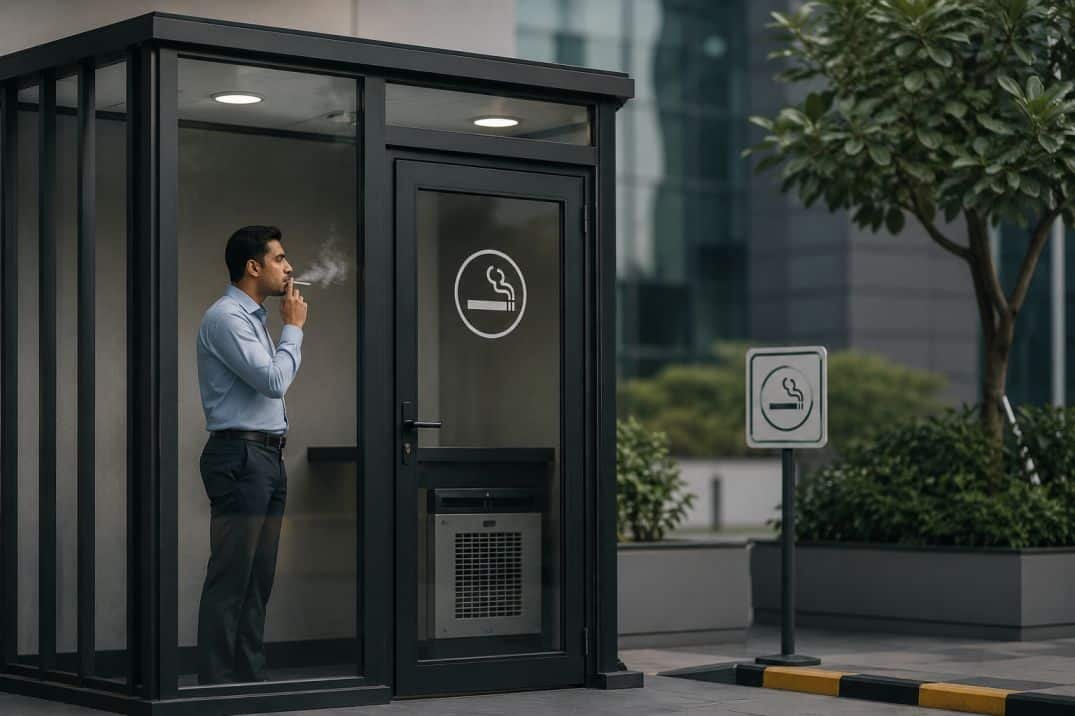
Businesses often approach designated smoking zones from a practical, product-first angle — what size cabin do we need, where should it go. Fewer stop to ask the more fundamental question first: what does Indian law actually require of a designated smoking zone, and what happens if a business gets this wrong? This guide takes a legal and compliance-focused approach, walking through the specific requirements under Indian tobacco control law rather than the product considerations we cover elsewhere.
At SmokinMe, we design smoking solutions that meet these legal requirements as a baseline, not an afterthought. This guide is intended to give business owners, compliance officers, and facilities managers a clear understanding of the actual legal framework governing designated smoking zones in India.
The Legal Foundation: COTPA, 2003
The Cigarette and Other Tobacco Products Act (COTPA), 2003, is the central piece of legislation governing smoking in India. Section 4 of COTPA specifically prohibits smoking in public places, which includes offices, restaurants, hotels, hospitals, and other enclosed spaces accessible to the public.
Importantly, COTPA doesn’t impose a blanket ban on smoking everywhere — it prohibits smoking in public places except within designated smoking areas that meet specific requirements. This means a business can lawfully accommodate smoking, provided the accommodation takes the form of a properly designated, compliant zone rather than informal or unrestricted smoking throughout the property.
What Qualifies as a “Public Place” Under COTPA
COTPA’s definition of public place is broad, covering any place to which the public has access, whether as a right or not. This explicitly includes:
- Government and private offices
- Hospitals and healthcare facilities
- Educational institutions
- Hotels and restaurants
- Auditoriums and public transport
- Shopping malls and commercial establishments
Given this broad scope, most commercial properties in India fall within COTPA’s smoke-free requirement, which is precisely why designated smoking zones — rather than an outright ban or unrestricted smoking — have become the standard compliance approach across Indian businesses.
Core Requirements for a Designated Smoking Area
While COTPA sets the overarching prohibition, specific rules and guidelines issued under the Act, along with state and local implementation, establish the practical requirements a designated smoking area needs to meet. Common requirements include:
Physical separation from non-smoking areas. The designated smoking area must be a distinct, separated space — not merely a section of an otherwise open, shared area.
Proper ventilation. The space must have ventilation adequate to prevent smoke from drifting into adjoining non-smoking areas, which is why filtration quality is a genuinely legal consideration, not just a comfort or odour-control feature.
Signage. Designated smoking areas typically require clear signage marking the space, so both smokers and non-smokers can easily identify the boundary of where smoking is and isn’t permitted.
Size limitations relative to the property. Some jurisdictions apply limits on how large a designated smoking area can be relative to the overall enclosed space, to prevent the designated area from effectively becoming the majority of the property.
No access for minors. Consistent with COTPA’s broader prohibition on tobacco access for individuals under 18, designated smoking areas should not permit access to minors.
Because specific implementation details can vary by state and local authority, we recommend confirming exact current requirements with your compliance team or local authority before finalising any designated smoking area design — this guide covers the general legal framework, not a substitute for jurisdiction-specific confirmation.
Employer and Property Owner Responsibilities
COTPA places direct responsibility on employers, managers, and property owners for compliance, not solely on individuals who smoke. This means a business found allowing smoking outside a properly designated area — even if the business itself isn’t directly facilitating the smoking — can face liability under the Act.
This is an important distinction for HR, compliance, and facilities teams to understand clearly: providing a designated smoking zone isn’t simply a courtesy to employees who smoke, it’s a direct compliance obligation the business itself carries. We’ve covered the practical HR and compliance implications of this in more detail in our guide on building a smoke-free office solution, which addresses how to translate this legal obligation into an actual workplace policy.
Penalties for Non-Compliance
COTPA establishes penalties for smoking in prohibited areas, which can apply both to individuals who smoke outside a designated zone and, in some circumstances, to the business or property owner who fails to prevent or address non-compliant smoking on their premises. Specific penalty amounts and enforcement approaches can vary and are subject to change, so we recommend confirming current penalty structures with a qualified legal advisor rather than relying on potentially outdated figures.
Beyond direct financial penalties, non-compliance carries additional risk: reputational impact, employee relations issues if non-smoking staff feel genuinely unprotected, and the ongoing operational burden of managing an unresolved, informal smoking situation rather than a properly designed compliant zone.
Passive Smoking: The Public Health Rationale Behind the Law
COTPA’s requirements around designated smoking areas exist specifically to protect non-smokers from secondhand, or passive, smoke exposure — a genuine health risk that extends well beyond the individual choice to smoke. Understanding this rationale helps clarify why simply having “a smoking area somewhere” isn’t sufficient; the area needs to genuinely contain smoke to fulfil the law’s actual protective purpose, not just exist in a technical, box-ticking sense.
We’ve covered the specific health implications of passive smoke exposure in the workplace in detail in our dedicated guide, Passive Smoking at Work, which is worth reading alongside this legal overview for a fuller picture of both the compliance and health dimensions of this issue.
How This Differs From a Product-Focused Approach
It’s worth being direct about the distinction between this guide and a product-overview piece on smoking zones generally: this guide focuses specifically on what the law requires — the compliance floor every business needs to meet, regardless of which specific product or vendor they choose. A product-focused guide, by contrast, covers the practical decisions around cabin types, sizing, and vendor selection once you’ve already established that a compliant zone is the goal.
Both perspectives matter, but they answer different questions. This guide answers “what am I legally required to do,” while a product guide answers “given that requirement, what should I actually buy and where should it go.”
Building Compliance Into Your Smoking Zone From the Start
Rather than treating legal compliance as a checklist applied after choosing a smoking solution, we recommend building it into the selection process from the outset. This means evaluating any smoking cabin, room, or lounge against the core requirements outlined above — genuine physical separation, adequate ventilation and filtration, clear signage, and appropriate sizing — before finalising a purchase decision.
A smoking solution that looks compliant on paper but doesn’t genuinely contain smoke and odour due to weak filtration isn’t meeting the actual intent of the law, even if it technically satisfies a signage or space requirement. We design our smoking cabins with this full picture in mind, not just the most visible, easily-checked requirements.
Why SmokinMe for Legally Compliant Smoking Zones
We build smoking cabins and lounges designed to meet the genuine intent of COTPA’s requirements — proper physical separation, effective multi-stage HEPA-14 and activated carbon filtration, and construction that supports appropriate signage and access control. We help clients understand not just what product to buy, but how that product fits into their broader legal compliance picture.
Contact SmokinMe today to discuss a designated smoking zone solution that genuinely meets your compliance requirements.
Frequently Asked Questions
What does Indian law actually require for a designated smoking area?
Under COTPA, 2003, a designated smoking area must be physically separated from non-smoking areas, have adequate ventilation to prevent smoke from drifting into adjoining spaces, display clear signage marking its boundary, and not permit access to minors. Specific implementation details can vary by state, so confirm current requirements with your local authority.
What is COTPA, and how does it regulate smoking in Indian workplaces?
The Cigarette and Other Tobacco Products Act (COTPA), 2003, is India’s central tobacco control legislation. Section 4 prohibits smoking in public places, including offices, but permits smoking within properly designated smoking areas that meet specific requirements around separation, ventilation, and signage.
What counts as a “public place” under COTPA?
COTPA defines public place broadly, covering any place the public has access to, including government and private offices, hospitals, educational institutions, hotels, restaurants, malls, and commercial establishments. Most commercial properties in India fall within this smoke-free requirement.
Who is legally responsible for smoking violations under COTPA — the employer or the individual?
COTPA places direct responsibility on employers, managers, and property owners for compliance, not solely on individuals who smoke. A business allowing smoking outside a properly designated area can face liability under the Act, separate from any penalty applying to the individual smoker.
What are the penalties for non-compliance with designated smoking zone rules in India?
COTPA establishes penalties that can apply to both individuals smoking outside designated areas and businesses failing to prevent or address non-compliant smoking on their premises. Specific penalty amounts can vary and change, so confirm current figures with a qualified legal advisor rather than relying on potentially outdated information.
Why does the law require ventilation and filtration standards for smoking areas, not just physical separation?
The requirement exists specifically to protect non-smokers from secondhand smoke exposure, a genuine health risk COTPA is designed to address. Physical separation alone doesn’t prevent smoke from drifting into adjoining areas without adequate ventilation and filtration, which is why filtration quality is a legal consideration, not just a comfort feature.
How does designated smoking zone law relate to passive smoking protection?
COTPA’s requirements exist to protect employees and the public from passive, or secondhand, smoke exposure. A designated zone needs to genuinely contain smoke to fulfil this protective purpose, not simply exist as a technical formality. Read more in our Passive Smoking at Work guide.
Can minors access a designated smoking area in India?
No — consistent with COTPA’s broader prohibition on tobacco access for individuals under 18, designated smoking areas should not permit access to minors, in addition to the general prohibition on tobacco sale to minors under the Act.
How is this legal guide different from a product-focused smoking zone guide?
This guide focuses on the compliance floor every business must meet under COTPA, regardless of vendor or product choice — physical separation, ventilation, signage, and access requirements. A product-focused guide addresses the practical decisions of cabin type, sizing, and vendor selection once you’ve established a compliant zone is the goal. Both are necessary, but they answer different questions.
How can SmokinMe help ensure my designated smoking zone is legally compliant?
We design smoking cabins and lounges built around the genuine intent of COTPA’s requirements — proper separation, effective multi-stage filtration, and construction supporting appropriate signage and access control. Contact us to discuss a compliant designated smoking zone for your property.
Also Read:- Coin-Operated Cigarette Dispensers: How They Work and Where They’re Legal