Call Us At +91 9811618476

Designated Smoking Zones
Designated Smoking Zones
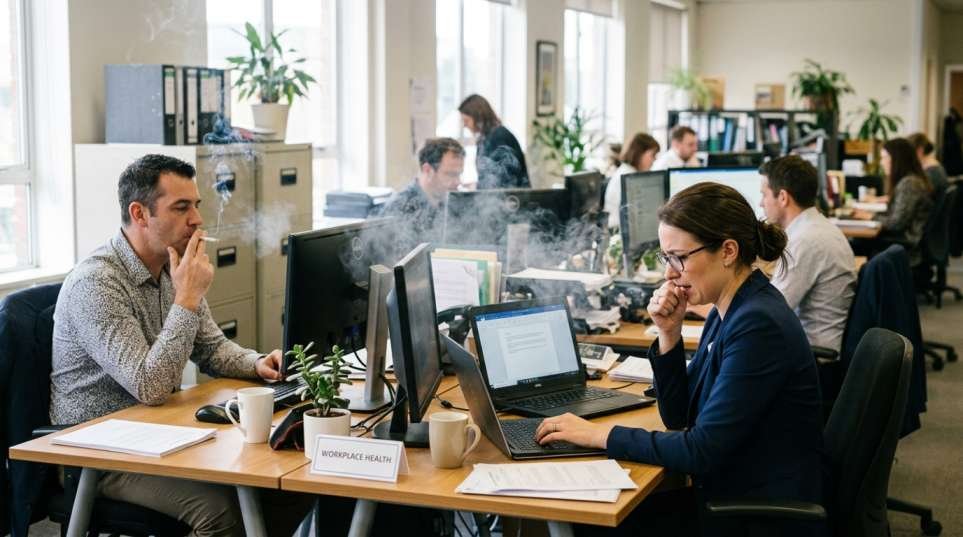
Passive smoking in the workplace occurs when employees or visitors who don’t smoke inhale cigarette smoke from others. Smoke from office entrances, parking areas, staircases, or smoking spots can easily spread, exposing non-smokers to second-hand smoke and affecting workplace air quality.
This doesn’t just impact health. It can lead to employee complaints, unpleasant odours, cigarette litter, lower productivity, and a poor experience for clients and visitors. Smokers also face challenges when there isn’t a comfortable, designated place to smoke.
To address these issues, the Cigarettes and Other Tobacco Products Act (COTPA), 2003 prohibits smoking in most indoor workplaces while allowing eligible establishments to create compliant designated smoking areas to help protect everyone.
Types of Passive Smoking
Passive smoking isn’t limited to the smoke you see. In workplaces, employees and visitors can be exposed in different ways:
- Mainstream smoke – Smoke exhaled by a person while smoking.
- Side-stream smoke – Smoke released directly from the burning cigarette. It spreads easily through entrances, corridors, parking areas, and other shared spaces.
- Third-hand smoke – Harmful tobacco residue left on clothes, hair, furniture, and other surfaces. These particles can remain in indoor environments even after the cigarette has been put out.
Understanding these different types of passive smoking highlights why simply asking employees to smoke outside may not completely prevent smoke exposure in the workplace.
Why Passive Smoking is a Workplace Issue
Workplaces are shared environments where everyone deserves clean air, regardless of whether they smoke.
Unfortunately, smoke rarely stays confined to one location.
It can easily spread through:
- Office entrances and exits
- Parking areas
- Staircases
- Fire exits
- Cafeterias
- Outdoor seating areas
- Loading bays
- Building ventilation systems
During India’s intense summers or monsoon season, the problem often becomes more noticeable. Employees naturally seek shelter under building awnings or near entrances while smoking, causing smoke to gather exactly where colleagues, clients, and visitors must pass.
Instead of reducing exposure, these situations often increase it.
For HR teams and facility managers, this frequently results in:
- Complaints from non-smoking employees
- Persistent smoke odours near reception
- Cigarette litter around office premises
- Discomfort for clients and visitors
- Increased cleaning requirements
- Tension between smoking and non-smoking employees
Managing passive smoking is therefore not just a health issue—it is part of creating a better workplace experience. Book Installation
Health Effects of Passive Smoking on Non-Smokers
The health risks associated with second-hand smoke are well documented by public health authorities worldwide.
Even short-term exposure may cause:
- Eye irritation
- Throat irritation
- Persistent coughing
- Headaches
- Dizziness
- Difficulty breathing
- Triggered allergies
For employees with asthma or other respiratory conditions, exposure can make symptoms significantly worse.
Long-term exposure has been associated with an increased risk of:
| Short-Term Effects | Long-Term Health Risks |
| Eye irritation | Heart disease |
| Coughing | Lung cancer |
| Headaches | Stroke |
| Sore throat | Chronic respiratory illness |
| Allergic reactions | Reduced lung function |
The workplace should be a place where employees can focus on their work—not worry about avoiding smoke near entrances or common areas. Explore Indoor Smoking Cabins
Passive Smoking Affects Smokers Too
It’s easy to assume smoking policies only impact non-smokers, but smokers also experience unnecessary inconvenience when workplaces lack proper smoking facilities.
Many employees are forced to:
- Walk long distances to designated outdoor areas
- Wait for elevators multiple times each day
- Smoke in uncomfortable weather
- Stand near busy roads or parking lots
- Share cramped outdoor spaces
- Feel socially isolated during breaks
This creates what many organisations quietly experience as workplace friction.
Rather than treating smokers as the problem, businesses can recognise smoking as an operational reality that requires thoughtful management.
Providing responsible smoking spaces respects employee choice while protecting everyone else’s comfort and health.
The Hidden Cost of Passive Smoking for Businesses
Passive smoking creates costs that often go unnoticed because they appear in many small ways rather than one large expense.
Lost Productivity
Consider a high-rise office building.
If one employee spends approximately 15 minutes travelling downstairs, smoking, and returning to their desk four times a day, that’s nearly one hour of lost productive time every working day.
Multiply that across multiple employees over an entire year, and the productivity impact becomes significant.
Employee Well-being
Poorly managed smoking areas often lead to:
- Frequent HR complaints
- Reduced employee satisfaction
- Workplace discomfort
- Lower morale
Company Reputation
First impressions matter.
Clients, job candidates, investors, and business partners notice if they must walk through cigarette smoke before entering your office.
A clean entrance reflects a professional workplace culture.
Facility Maintenance
Without designated smoking infrastructure, businesses often struggle with:
- Cigarette butt litter
- Burn marks
- Smoke stains
- Unpleasant odours
- Higher housekeeping costs
ESG and Workplace Standards
Modern organisations increasingly prioritise employee wellness, environmental responsibility, and healthy workplaces.
Managing smoking responsibly supports broader ESG initiatives while demonstrating genuine care for employee well-being. Discover Outdoor Smoking Zones
What Does Indian Law Say About Smoking at Work?
Under Section 4 of the Cigarettes and Other Tobacco Products Act (COTPA), 2003, smoking is prohibited in public places, including most indoor workplaces.
The objective is straightforward: protect people from involuntary exposure to tobacco smoke.
However, the law also recognises practical workplace realities.
Certain establishments—including qualifying workplaces, hotels, restaurants, and airports—may establish Designated Smoking Areas (DSAs), provided they meet applicable structural and regulatory requirements.
This means businesses do not necessarily have to choose between banning smokers entirely or allowing unmanaged smoking around their premises.
Instead, employers should focus on:
- Protecting non-smokers from second-hand smoke
- Supporting employee welfare
- Following applicable COTPA provisions and local regulations
- Creating clearly designated smoking environments where permitted
While every organisation should seek appropriate legal guidance for compliance, the broader objective remains the same: reducing passive smoke exposure through responsible workplace planning.
Why Traditional Solutions Often Fall Short
Many organisations attempt simple fixes first. While well-intentioned, they rarely solve the underlying issue.
| Traditional Approach | Common Limitation |
| No Smoking signboards | Moves smokers elsewhere rather than managing smoke |
| Outdoor smoking corners | Smoke still drifts into nearby areas |
| Exhaust fans | Simply relocate smoke instead of treating it |
| Asking employees to smoke outside | Increases walking time and productivity loss |
| Open smoking shelters | Limited protection from weather and poor smoke containment |
Managing smoke effectively requires more than relocating people—it requires controlling smoke at its source.
A Smarter Business Solution for Responsible Smoking
The most successful workplaces don’t ignore smokers, nor do they compromise the health of non-smokers.
Instead, they create a dedicated, controlled smoking environment where smoke is captured, filtered, and managed before it spreads into surrounding areas.
That is exactly where we at SmokIn Me help businesses.
Rather than relying on outdated smoking corners or ineffective exhaust systems, we provide modern smoking cabin solutions that help organisations balance employee comfort, workplace cleanliness, and compliance objectives.
How We Help Businesses Manage Passive Smoking
At SmokIn Me, we help businesses manage passive smoking by creating safe, designated smoking spaces that protect non-smokers while offering smokers a comfortable place to smoke. Our self-contained smoking cabins capture smoke at the source instead of allowing it to spread across the workplace.
Our solutions offer:
- Plug-and-play installation
- Indoor and outdoor models
- No external ducting or major civil work
- HEPA-14 multi-stage filtration
- Smoke capture at source
- Effective odour control
- Air-conditioned interiors
- Fire-safe design
- Low maintenance
- Easy relocation when workplace layouts change
Instead of simply moving smokers outside, we help you create a cleaner, healthier, and more organised workplace with responsible smoking solutions.
How SmokIn Me Works
Our cabins follow a simple but highly effective process.
- Smoke is captured immediately at its source.
- Fine particles pass through multi-stage filtration.
- Activated carbon filters reduce odours.
- Clean, conditioned air is circulated within the cabin.
- Fire-safe ash collection keeps the area clean.
- The surrounding workplace remains significantly more comfortable for everyone.
This controlled approach helps reduce smoke drift while improving the overall workplace environment. Contact Us!
Benefits for Everyone
| Stakeholder | Benefits |
| Non-smokers | Reduced passive smoke exposure, cleaner air, improved comfort |
| Smokers | Comfortable, air-conditioned, weather-protected smoking space |
| Employers | Better workplace image, improved productivity, fewer complaints |
| Facility Managers | Cleaner premises, easier maintenance, organised smoking zones |
| Property Owners | Supports compliance efforts and enhances building aesthetics |
Where Can SmokIn Me Be Installed?
Our smoking cabin solutions are suitable for a wide range of commercial environments, including:
- Corporate offices
- IT parks
- Manufacturing plants
- Commercial buildings
- Hotels
- Airports
- Railway stations
- Educational campuses
- Industrial facilities
- Shopping malls
- Business parks
- Healthcare campuses where permitted by applicable regulations
Also Read:- Smoke Control Solution for Offices That Creates Healthier, Cleaner & Compliant Workplaces
Frequently Asked Questions
Can a smoking cabin be installed inside an office building?
Yes. Self-contained smoking cabins are designed for indoor use and can be installed in suitable locations without major structural modifications, subject to your building policies and applicable regulations.
How many employees can use a smoking cabin at the same time?
It depends on the cabin model. Smoking cabins are available in different capacities to suit small offices as well as large corporate campuses with higher daily usage.
Do smoking cabins require regular maintenance?
Yes, like any air filtration system, smoking cabins require periodic filter replacement and routine servicing to maintain their performance and air quality.
Can smoking cabins be relocated if the office layout changes?
Most modern plug-and-play smoking cabins can be moved to a new location with minimal disruption, making them suitable for expanding or reconfigured workplaces.
What factors should businesses consider when choosing a smoking cabin?
Businesses should evaluate factors such as capacity, filtration technology, installation space, energy efficiency, maintenance requirements, and after-sales support to ensure the solution meets their workplace needs.
Conclusion
Passive smoking doesn’t just affect the person holding the cigarette—it affects your employees, visitors, workplace image, and everyday operations. Simply asking people to smoke outside often shifts the problem instead of solving it.
At SmokIn Me, we help you create a workplace that respects both smokers and non-smokers with smart, designated smoking cabin solutions. The result is a cleaner workplace, fewer complaints, better employee comfort, and a more professional environment.
Ready to manage passive smoking the right way? Get in touch with our team to schedule a live demo or find the right smoking cabin solution for your workplace.