Call Us At +91 9811618476

Designated Smoking Zones
Designated Smoking Zones
Smoking Lounges for Shopping Malls: A Facility Manager's Guide
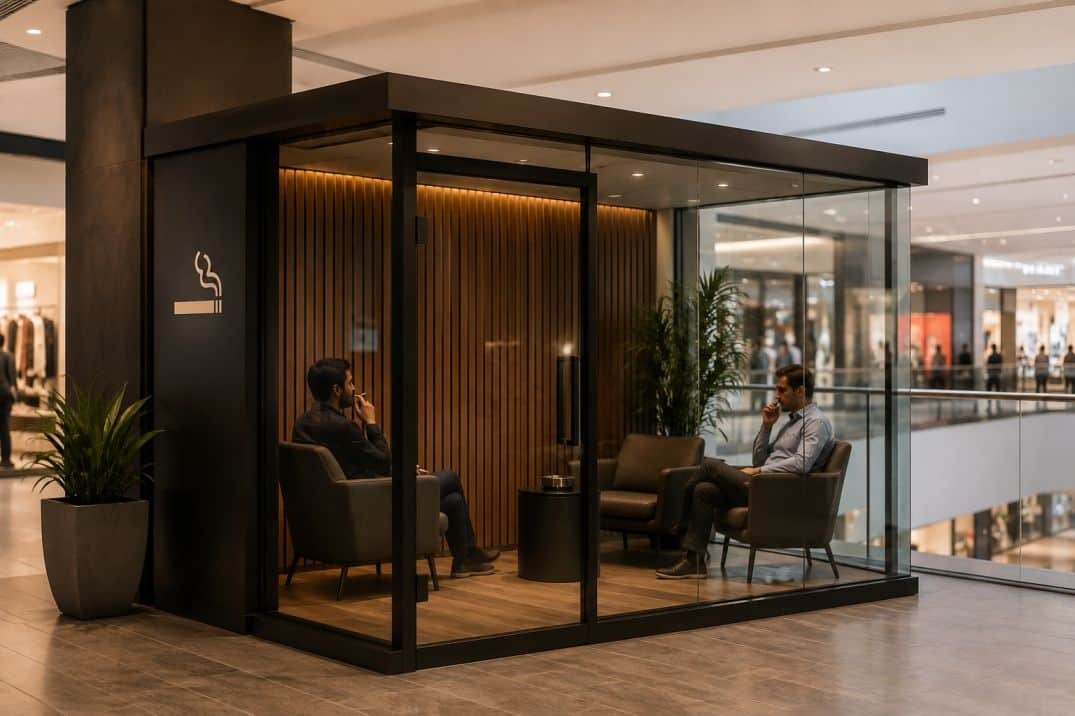
Shopping malls face a smoking accommodation challenge that’s genuinely distinct from offices, hotels, or hospitals: continuous, high-volume footfall from a mix of shoppers, staff, and visitors, spread across a large property where multiple entrances and food courts all create their own localised demand. Get the placement or capacity wrong, and you end up with either overcrowded, poorly ventilated zones or smoke drifting into retail spaces and food courts — both genuinely damaging to the mall’s overall shopping experience.
At SmokinMe, we design smoking lounges specifically for high-footfall retail environments like malls. This guide walks facility managers through what makes mall smoking lounge planning different, how to size and place lounges properly across a large property, and what genuinely compliant, well-managed mall smoking areas look like in practice.
Why Malls Need a Different Approach Than Offices or Hotels
A corporate office typically has predictable peak usage tied to lunch breaks and shift changes, and a single well-placed cabin often covers the entire building’s needs. A mall’s usage pattern looks completely different:
- Multiple concentrated demand points. Shoppers gather near food courts, entrances, and popular retail zones, meaning a single centrally located smoking area rarely serves the whole property effectively.
- Mixed user groups. Staff, shoppers, and delivery or maintenance personnel all use smoking facilities, often with different schedules and different expectations around convenience and comfort.
- Extended operating hours. Malls frequently operate longer daily hours than a typical office, meaning smoking facilities need to handle a longer continuous demand window.
- Higher scrutiny on air quality and odour control. Smoke or odour drifting into retail spaces or food courts creates a far more visible and damaging problem than the equivalent issue in an office corridor, given the direct impact on paying customers’ shopping experience.
- Guest experience considerations. Unlike an office, where employees are a captive audience, mall visitors are customers whose experience directly affects footfall and revenue — a poorly managed smoking area reflects on the property as a whole.
Sizing and Placement: A Zone-Based Approach
Rather than treating smoking accommodation as a single sitewide decision, we recommend mall facility managers think in terms of zones — matching smoking solution type and capacity to how each part of the property actually gets used.
High-Traffic Zones: Main Entrances and Food Courts
Areas with the highest concentrated footfall — main entrances, food court exits, major anchor store entrances — typically need a full smoking lounge rather than a compact cabin. These zones see continuous, high-volume demand throughout operating hours, and a lounge’s larger capacity prevents the queuing and overcrowding a single small cabin would create.
Moderate-Traffic Zones: Secondary Entrances and Upper Floors
Quieter wings, secondary entrances, or upper floors with lower overall footfall can often be served effectively by a smaller smoking cabin rather than a full lounge. This zone-based sizing avoids the cost of over-building capacity in areas that don’t need it, while still providing genuine coverage across the property.
Staff-Only Areas
Many malls benefit from a separate staff smoking area distinct from customer-facing lounges, positioned near staff entrances, loading areas, or back-of-house zones. This keeps staff smoking breaks efficient without requiring staff to navigate through customer-facing areas of the mall during a short break.
Design Considerations Specific to Retail Environments
Aesthetic Integration
A smoking lounge in a mall is a visible part of the shopping environment, not a hidden utility space. We design our lounges to integrate with modern retail aesthetics — clean lines, quality finishes, and a look that complements rather than clashes with the surrounding retail environment. A smoking area that looks like an industrial afterthought stands out for the wrong reasons in a space otherwise designed around customer experience.
Odour Containment Near Food Courts
Malls with food courts face a particular challenge: smoke or odour drifting toward dining areas is especially noticeable and damaging to the overall experience. We recommend prioritising the strongest available filtration — combined HEPA-14 and activated carbon — for any lounge positioned near food-adjacent areas, since the tolerance for any odour leakage is effectively zero in this context.
Visibility and Security
Mall smoking lounges benefit from a layout that balances user privacy with adequate visibility for security and facilities staff. Fully enclosed, opaque structures can create blind spots that complicate security monitoring, while a well-designed lounge with appropriate sightlines supports both user comfort and property security simultaneously.
Accessibility Across a Large Property
With malls often spanning multiple floors and wings, smoking lounge placement needs genuine consideration of how shoppers and staff actually move through the building. A lounge that’s technically present but poorly positioned relative to natural foot traffic patterns tends to see inconsistent use, with informal smoking spots emerging elsewhere on the property as a result.
Compliance Considerations for Mall Smoking Areas
Under India’s Cigarette and Other Tobacco Products Act (COTPA), 2003, malls — as enclosed public places — must remain smoke-free outside of properly designated smoking areas meeting specific ventilation and signage requirements. Given that malls serve large numbers of the general public, not just employees, the compliance stakes around getting this right are particularly high — a non-compliant or poorly managed smoking area creates visible risk in a property that hosts significant public foot traffic daily.
We recommend confirming any additional state, municipal, or mall-specific regulatory requirements with your compliance team before finalising lounge placement and design, since retail properties can sometimes face additional local requirements beyond the general COTPA framework.
Related Product Considerations: Smoking Lounges as Part of a Broader Strategy
Smoking lounges rarely operate in isolation within a mall’s overall smoking strategy. Many of our mall clients combine larger lounges at high-traffic zones with smaller cabins in quieter areas, and in some cases integrate a vending solution within the lounge itself, giving customers and staff convenient access without leaving the designated area.
This mixed approach — rather than a single, uniform solution applied everywhere — typically delivers better coverage and a more genuinely usable outcome across a large, varied property like a shopping mall.
Maintenance Demands for High-Footfall Retail Environments
Mall smoking lounges, given their extended operating hours and high user volume, require more frequent servicing than a typical office installation. Filter replacement schedules should reflect actual usage volume rather than a generic interval, and ash disposal systems need regular attention given the continuous throughput a busy mall lounge experiences. We recommend building this into your facilities management schedule from the outset, since a lounge that falls behind on maintenance quickly loses the filtration performance that justified the installation in the first place.
Why SmokinMe for Mall Smoking Lounges
We design smoking lounges specifically for high-footfall retail environments, with capacity planning based on realistic zone-by-zone demand rather than a single property-wide assumption. Every lounge combines HEPA-14 and activated carbon filtration, fire-safe construction, and a design aesthetic built to integrate with modern retail environments rather than standing out as a utility structure.
Contact SmokinMe today to discuss a smoking lounge strategy tailored to your mall’s specific layout and footfall patterns.
Frequently Asked Questions
How is smoking lounge planning for malls different from offices or hotels?
Malls face concentrated demand at multiple points — entrances, food courts, popular retail zones — rather than a single predictable peak like an office’s lunch break. Mixed user groups (staff, shoppers, visitors), extended operating hours, and higher scrutiny on odour control near food courts and retail spaces all make mall smoking lounge planning genuinely distinct from office or hotel installations.
How should I size and place smoking lounges across a large mall property?
Take a zone-based approach: install full smoking lounges at high-traffic areas like main entrances and food courts, smaller cabins in moderate-traffic zones like secondary entrances or upper floors, and consider a separate staff-only smoking area near back-of-house zones. This avoids both overcrowding in high-demand areas and unnecessary capacity in quieter zones.
How do I prevent smoke and odour from drifting into food courts or retail areas?
Prioritise the strongest available filtration — combined HEPA-14 particle filtration and activated carbon for odour control — especially for any lounge positioned near food-adjacent areas, where tolerance for odour leakage is effectively zero. Proper zone placement, accounting for foot traffic and building layout, also reduces the risk of smoke affecting nearby retail spaces.
What design considerations matter most for mall smoking lounges?
Aesthetic integration with the surrounding retail environment, strong odour containment near food courts, a layout balancing user privacy with security visibility, and genuine accessibility relative to how shoppers and staff actually move through the property all matter significantly more in a mall than in a typical office installation.
What are the compliance requirements for smoking areas in Indian shopping malls?
Under COTPA, 2003, malls must remain smoke-free outside of properly designated smoking areas meeting specific ventilation and signage requirements, the same as any other enclosed public place. Given the high public foot traffic malls handle, we recommend confirming any additional state, municipal, or mall-specific requirements with your compliance team beyond the general COTPA framework.
Should malls use smoking lounges, cabins, or a combination of both?
Most malls benefit from a combination — larger lounges at high-traffic zones like main entrances and food courts, paired with smaller cabins in quieter wings or upper floors. A single uniform solution applied across the entire property rarely matches the varied footfall patterns typical of a large mall.
How do I prevent security blind spots with an enclosed smoking lounge in a mall?
Design the lounge with appropriate sightlines that balance user privacy with adequate visibility for facilities and security staff, rather than a fully opaque, fully enclosed structure that creates monitoring blind spots. This supports both user comfort and property security simultaneously.
Can I integrate vending solutions within a mall smoking lounge?
Yes — many mall clients integrate a vending solution directly within their smoking lounge, giving customers and staff convenient access to cigarettes and essentials without leaving the designated area. This works particularly well at high-traffic lounges near food courts or main entrances.
How often do mall smoking lounges need maintenance compared to office cabins?
Mall lounges typically need more frequent filter replacement and ash disposal servicing than office cabins, given their extended operating hours and higher continuous user volume. We recommend basing your maintenance schedule on actual usage volume rather than a generic interval designed for lower-footfall installations.
How can SmokinMe help design a smoking lounge strategy for my mall?
Contact SmokinMe with details about your mall’s layout, footfall patterns, and key high-traffic zones. We assess your property individually and recommend a zone-based combination of lounges and cabins suited to your specific space, rather than a single generic solution applied uniformly.
Also Read:- Can You Smoke in a Casino? Rules and Designated Options