Call Us At +91 9811618476

Designated Smoking Zones
Designated Smoking Zones
Outdoor Smoking Shelters: Weather-Protected Solutions for Businesses
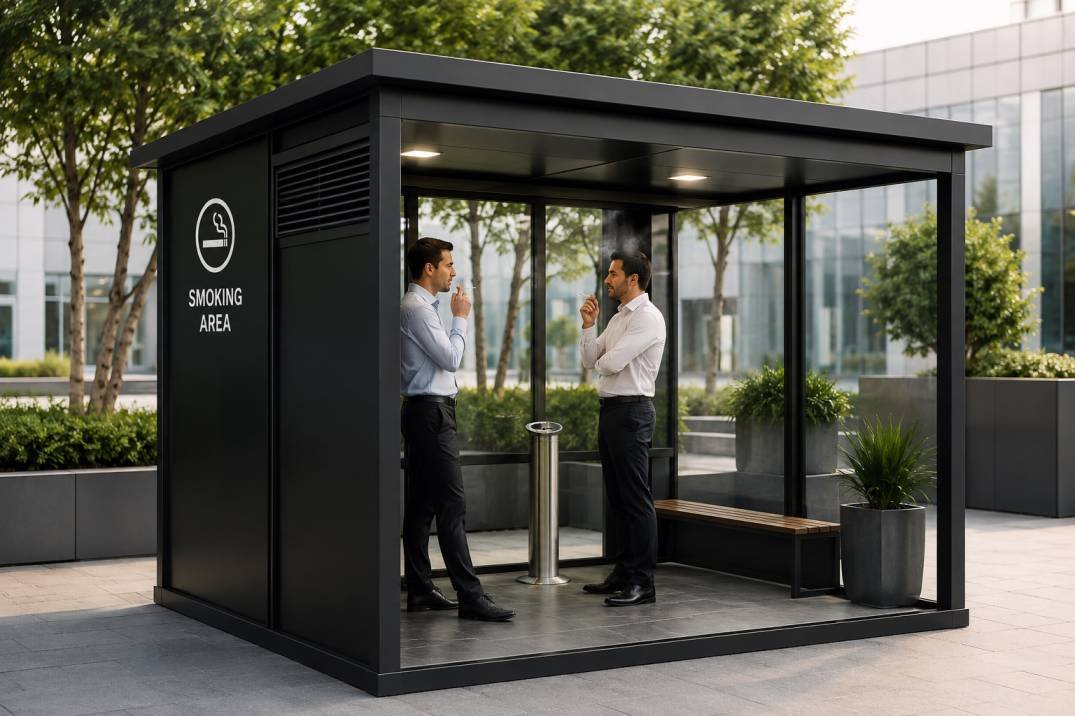
Businesses searching for a way to accommodate smokers outdoors often use different terms for essentially the same need — an outdoor smoking cabin, an outdoor smoking shelter, a smoker shelter, or even a smoking hut or smoking shed. Whatever the terminology, the underlying requirement is the same: a weather-protected, properly contained outdoor space where smoking is genuinely comfortable and compliant, rather than an exposed, informal spot that only works in good weather.
At SmokinMe, we design outdoor smoking shelters engineered specifically for demanding weather conditions and commercial property requirements. This guide covers what a genuinely effective outdoor smoking shelter needs, how it compares to other outdoor smoking options, and what to look for whether you’re outfitting an office, hotel, restaurant, or home property.
What Is an Outdoor Smoking Shelter?
An outdoor smoking shelter is a weather-protected structure specifically designed to accommodate smokers outside a building while shielding them from rain, sun, wind, and other weather conditions that would otherwise make an unprotected outdoor smoking spot impractical for regular, year-round use. Unlike a fully enclosed indoor smoking cabin, a shelter typically offers a more open-air feel while still providing genuine structural protection — the specific balance between open air and enclosure varies by design and climate requirements.
The term covers a range of specific configurations: some shelters are largely open-sided with a substantial roof structure for rain and sun protection; others incorporate partial walls or windbreaks for additional weather protection in more exposed locations; and some integrate filtration systems similar to fully enclosed cabins for businesses wanting stronger odour and smoke containment even in an outdoor setting.
Why Businesses Choose Outdoor Shelters Over Indoor Cabins
Outdoor smoking shelters offer several advantages that make them the right choice for many properties, though the decision ultimately depends on available space, climate, and specific operational needs:
No indoor floor space required. For properties where interior space is limited or expensive to repurpose, an outdoor shelter avoids the floor space trade-off an indoor cabin requires.
Often lower installation complexity. Depending on the specific design, outdoor shelters can sometimes involve simpler installation than an indoor cabin, particularly when no interior electrical or filtration infrastructure work is needed.
A more open-air experience for users. Some smokers and businesses prefer the more open, ventilated feel of a shelter over a fully enclosed indoor cabin, particularly in climates where outdoor comfort is achievable for much of the year.
Suits properties with available outdoor space but limited interior capacity. Restaurants with patios, offices with courtyards, and hotels with garden areas often have outdoor space that’s otherwise underused, making a shelter a practical way to accommodate smoking without touching interior square footage.
The trade-off is that outdoor shelters depend more heavily on genuinely effective weather protection and, in exposed or harsh climates, may face more variable year-round usability than a climate-controlled indoor cabin — which is why shelter design quality matters considerably.
What Makes an Effective Outdoor Smoking Shelter
Not every structure marketed as an “outdoor smoking shelter” delivers genuine year-round usability. Based on what we’ve learned designing outdoor solutions across demanding climates, here’s what actually matters:
Substantial Weather Protection
A shelter needs a roof structure genuinely large enough to protect against rain from multiple angles, not just directly overhead — wind-driven rain is a common failure point for undersized shelter roofing. Materials should be rated for sustained UV and weather exposure rather than standard construction materials that degrade quickly outdoors.
Wind Consideration
Exposed outdoor locations often experience more wind than an initial site visit might suggest, particularly during specific seasons or weather patterns. A shelter with partial walls or windbreaks positioned based on actual local wind patterns performs considerably better than an open structure assuming calm conditions year-round.
Structural Durability
Outdoor shelters face substantially more environmental wear than indoor cabins — sun exposure, temperature fluctuations, rain, and in some climates, snow or extreme heat. Materials and construction need to be genuinely rated for sustained outdoor use rather than adapted indoor materials that weren’t designed for this exposure.
Ash and Waste Management
A properly designed shelter includes integrated, fire-safe ash disposal built into the structure itself, positioned to remain functional and easy to empty regardless of weather conditions — an important detail that’s easy to overlook in shelter design but significantly affects day-to-day usability and maintenance.
Lighting for Extended-Hours Use
Properties with extended operating hours need shelters with adequate lighting for safe, comfortable use after dark, which is sometimes overlooked in shelter designs focused primarily on daytime weather protection.
Optional Filtration for Odour and Smoke Containment
For properties wanting stronger control over smoke and odour drift — particularly those near building entrances, outdoor dining areas, or residential neighbours — a shelter incorporating filtration technology, similar to what’s used in fully enclosed cabins, offers meaningfully better containment than an open-air structure relying purely on natural ventilation.
Outdoor Smoking Shelters vs. Smoking Huts, Sheds, and Similar Terms
Businesses and homeowners searching for this kind of solution often use varying terminology — smoking shelter, smoking hut, smoking shed, smoker shack — largely interchangeably, since these generally describe the same underlying category of weather-protected outdoor smoking structure, sometimes with a specific stylistic or size connotation attached to each term:
Smoking shelter is the most general term, covering the full range of weather-protected outdoor smoking structures from simple roofed areas to more substantial partially enclosed designs.
Smoking hut often implies a somewhat more substantial, semi-enclosed structure, sometimes resembling a small standalone building rather than an open-sided shelter.
Smoking shed similarly suggests a more fully enclosed structure, often with a design aesthetic closer to a garden shed than an open shelter.
Smoker shack is a more casual or residential-leaning term, often used for smaller, simpler backyard or home-use structures rather than commercial installations.
Regardless of which term you search for or use, the underlying evaluation criteria remain the same: genuine weather protection, durable materials, proper ash management, and — for businesses specifically — the level of smoke and odour containment the location actually requires.
Outdoor Smoking Shelters for Homes
While much of this guide focuses on commercial applications, outdoor smoking shelters are also a common request for residential properties — homeowners wanting a dedicated, weather-protected smoking space in a garden or backyard rather than smoking in an unprotected outdoor spot or, worse, indoors where odour and residue accumulate throughout the home.
For residential use, the same core principles apply, generally at a smaller scale: substantial weather protection, durable outdoor-rated materials, and simple, easy-to-maintain ash disposal. Homeowners often prioritise aesthetic integration with their garden or outdoor living space more heavily than a commercial buyer would, making design and finish an important consideration alongside pure functionality.
Climate-Specific Design Considerations
Outdoor smoking shelter requirements vary considerably depending on the climate they’ll operate in:
Hot climates need substantial shade coverage and heat-rated materials that won’t degrade or become uncomfortably hot to the touch under sustained sun exposure, along with airflow design that doesn’t trap heat within a partially enclosed structure.
Wet or rainy climates need roofing genuinely sized and angled to handle sustained or wind-driven rain, along with drainage consideration so the shelter floor doesn’t accumulate standing water.
Cold climates may benefit from partial enclosure and windbreak design to maintain some degree of usable comfort during colder months, though full climate control isn’t typically expected of an outdoor shelter the way it would be for an indoor cabin.
Coastal or humid climates need materials specifically resistant to salt air and humidity-driven corrosion or material degradation, which standard materials often aren’t rated to handle long-term.
We assess these climate-specific factors as part of every outdoor shelter project, rather than offering a single generic design regardless of where it will actually be installed.
Comparing Outdoor Shelters to SmokinMe’s Other Product Lines
An outdoor smoking shelter is one option within a broader range of smoking solutions, and the right choice depends on your specific property and needs:
Choose an outdoor shelter when you have available outdoor space, want to avoid using interior square footage, and your climate allows for genuinely comfortable outdoor use for most of the year with proper weather protection.
Choose an indoor smoking cabin when interior space is available and you want climate-controlled comfort regardless of outdoor weather conditions, or when your outdoor climate is too extreme for a shelter to provide adequate year-round comfort.
Choose a smoking lounge when your property has high, continuous footfall — malls, airports — that a single shelter or cabin wouldn’t have the capacity to serve.
We help clients work through this decision as part of an initial site assessment, rather than defaulting to a single product type regardless of fit.
Why SmokinMe for Outdoor Smoking Shelters
We design outdoor smoking shelters engineered for demanding weather conditions, using durable, weather-rated materials, substantial protection against rain, sun, and wind, and integrated fire-safe ash disposal as standard. For businesses wanting stronger smoke and odour containment even in an outdoor setting, we offer shelter designs incorporating the same multi-stage HEPA-14 and activated carbon filtration used across our indoor cabin range.
Whether you need a compact residential shelter or a commercial-grade outdoor smoking solution for an office, restaurant, or hotel property, we assess your specific site, climate, and requirements before recommending a design.
Contact SmokinMe today to discuss an outdoor smoking shelter built for your property and climate.
Frequently Asked Questions
What is an outdoor smoking shelter?
An outdoor smoking shelter is a weather-protected structure designed to accommodate smokers outside a building, shielding them from rain, sun, and wind while offering a more open-air feel than a fully enclosed indoor smoking cabin. Designs range from simple roofed structures to more substantial partially enclosed shelters.
What’s the difference between a smoking shelter, a smoking hut, and a smoking shed?
These terms are largely used interchangeably to describe weather-protected outdoor smoking structures, though “hut” and “shed” often imply a more substantial, semi-enclosed design, while “shelter” is the more general term covering the full range from open-roofed structures to fully enclosed options.
Are outdoor smoking shelters better than indoor smoking cabins?
Neither is universally better — the right choice depends on your property. Outdoor shelters avoid using interior floor space and suit properties with available outdoor area, while indoor cabins offer climate-controlled comfort regardless of outdoor weather, which matters more in extreme climates.
What materials should an outdoor smoking shelter use?
Look for materials genuinely rated for sustained outdoor exposure — UV-resistant, weather-rated construction rather than standard materials adapted from indoor use. In coastal or humid climates, prioritise materials resistant to salt air and humidity-driven degradation specifically.
Do outdoor smoking shelters need ventilation or filtration?
Basic shelters rely on natural airflow for ventilation, which works reasonably well in genuinely open, well-ventilated designs. For businesses wanting stronger smoke and odour containment — particularly near entrances or outdoor dining areas — a shelter incorporating multi-stage filtration technology offers meaningfully better control than natural ventilation alone.
Can outdoor smoking shelters be used at homes?
Yes — outdoor smoking shelters are commonly used for residential properties, typically at a smaller scale than commercial installations, giving homeowners a dedicated, weather-protected garden or backyard smoking space rather than an unprotected outdoor spot or smoking indoors.
How do I choose the right size outdoor smoking shelter?
Base your decision on expected peak-time usage — how many people will use the shelter simultaneously during busiest periods — along with your available outdoor space. For commercial properties, consider realistic footfall patterns rather than average daily use, which tends to underestimate actual peak demand.
What climate factors affect outdoor smoking shelter design?
Hot climates need substantial shade and heat-rated materials; wet climates need robust, wind-angled roofing with proper drainage; cold climates benefit from partial enclosure and windbreaks; and coastal or humid climates need salt-air and humidity-resistant materials specifically.
How much does an outdoor smoking shelter cost?
Cost depends on size, materials, level of weather protection, and whether filtration technology is included. We assess each property’s specific climate and requirements individually and provide a tailored quote rather than a flat, generic price — contact us for an estimate based on your project.
Does SmokinMe build custom outdoor smoking shelters?
Yes — we design outdoor smoking shelters engineered for your specific climate and property requirements, from compact residential structures to commercial-grade solutions with integrated multi-stage filtration. Contact SmokinMe to discuss a shelter designed for your specific site and needs.
Also Read:- How Modern Smoking Rooms Work Without Construction: No Ducting Required