Call Us At +91 9811618476

Designated Smoking Zones
Designated Smoking Zones
Is Outdoor Smoking Really Safer? What Employers Need to Know
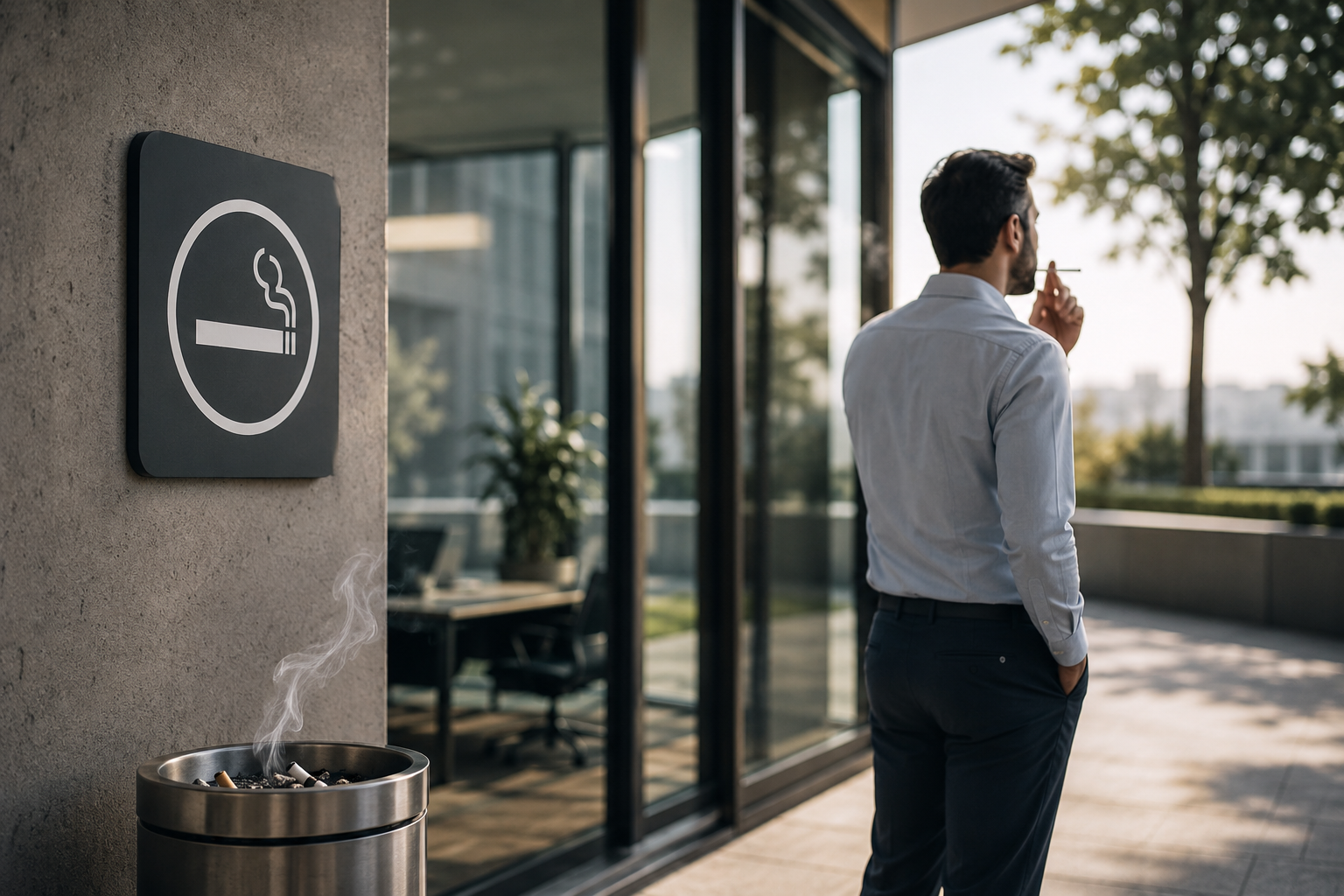
“Just have them smoke outside” is one of the most common responses employers reach for when addressing workplace smoking. It feels like the obvious, low-effort solution — no construction, no filtration system, no budget line item. But is stepping outside actually the safer, more compliant answer it appears to be, or does it just move the problem somewhere less visible?
It’s an understandable instinct. Compared to installing an indoor smoking room with ducting and HVAC modifications, pointing employees toward the parking lot or a side entrance feels free and immediate. No procurement process, no vendor evaluation, no waiting on installation. But that simplicity is exactly what makes this approach easy to get wrong — the absence of planning doesn’t mean the absence of risk, it just means the risk hasn’t been managed.
At SmokinMe, we work with employers across India who’ve genuinely tried the “just smoke outside” approach and later discovered it created more problems than it solved — complaints from nearby offices, smoke drifting into entrances, and non-smoking employees still exposed to secondhand smoke on their way in and out of the building. In this guide, we break down what outdoor smoking actually does and doesn’t solve, what your legal obligations are, and when a proper outdoor smoking cabin makes more sense than an unmanaged outdoor smoking spot.
The Myth: “Outdoor Smoking Is Automatically Safer”
Outdoor smoking does reduce concentration of smoke compared to smoking in a fully enclosed indoor space with no ventilation at all — that part is genuinely true. Open air disperses smoke faster than a sealed room does. But “reduced concentration” isn’t the same as “no exposure,” and that distinction matters far more to employers than the simplified version of this claim suggests.
Wind direction, building layout, and proximity to entrances, windows, and HVAC intakes all determine how much secondhand smoke actually reaches non-smokers nearby. An informal outdoor smoking spot near a main entrance, a busy walkway, or an open window can expose far more people to secondhand smoke than a single enclosed, properly filtered smoking cabin positioned away from foot traffic. The open-air setting creates a false sense of safety precisely because the smoke is less visible and less concentrated in any one spot — not because it’s actually contained.
Research consistently shows that secondhand smoke exposure occurs outdoors too, particularly at close range and downwind of the smoker. An employee walking past a cluster of colleagues smoking near a building entrance is still inhaling secondhand smoke, even though they’re technically outside.
This is the core problem with treating “outdoor” as a synonym for “safe”: the two aren’t the same thing, and conflating them leads employers to skip planning they’d never skip for an indoor solution. Nobody would install an indoor smoking room without thinking about ventilation and placement — but an outdoor spot gets chosen almost by accident, based on which door people happen to use, rather than any deliberate assessment of airflow or foot traffic.
What Outdoor Smoking Doesn’t Solve
Simply telling employees to smoke outside, without any designated zone, signage, or planning, tends to create a predictable set of problems:
- Smoke drifts toward entrances and windows. Without a defined, wind-conscious location, smoke often ends up exactly where people are trying to walk in and out of the building.
- Cigarette litter accumulates. Butts and ash collect around whatever spot smokers gravitate toward, usually near a door or a convenient wall, creating an ongoing cleanliness issue.
- Non-smokers still get exposed. Anyone walking through or near an informal smoking spot experiences secondhand smoke exposure, regardless of the fact that it’s technically outdoors.
- It doesn’t meet compliance requirements. An unplanned outdoor gathering spot for smokers doesn’t satisfy the legal requirement for a properly designated smoking area under Indian law — it’s simply an unmanaged version of the same underlying issue.
- It creates inconsistent policy enforcement. Without a defined zone, it’s hard for facilities or HR teams to enforce where smoking is and isn’t acceptable, since there’s no clear boundary to point to.
None of this means outdoor solutions are wrong — it means unplanned, informal outdoor smoking is the problem, not outdoor smoking itself.
It’s worth being specific about why this distinction gets lost so often. Employers who set up an informal outdoor spot usually aren’t being careless — they’re responding to an immediate need (employees are smoking somewhere regardless, better it’s outside than in a stairwell) without the information needed to plan it properly. The fix isn’t abandoning the idea of outdoor smoking; it’s applying the same level of planning outdoors that any responsible employer would apply indoors.
What Actually Works: A Properly Designed Outdoor Smoking Cabin
The genuine advantage of outdoor solutions is that you have more flexibility in placement and construction than you do indoors. An outdoor smoking cabin captures the real benefit people are reaching for when they say “smoke outside” — fresh air, no indoor construction — while actually solving the problems informal outdoor smoking creates.
A well-positioned outdoor smoking cabin, like the ones we build at SmokinMe, gives employees a weather-protected, properly filtered space located away from entrances, windows, and HVAC intakes. Because it’s a defined, contained structure, smoke doesn’t drift unpredictably based on wind direction — the cabin’s filtration system captures it at the source, the same way an indoor cabin does, just built to handle outdoor weather conditions.
This addresses every failure point of informal outdoor smoking: litter stays contained to the unit’s built-in ash disposal system, the location can be chosen deliberately with wind and foot traffic in mind, and it satisfies the legal requirement for a genuinely designated smoking area rather than an ad-hoc gathering spot.
It’s worth being clear about what changes and what doesn’t. Employees still get the outdoor environment many prefer — fresh air, no sense of being enclosed in a small indoor unit. What changes is that the smoke itself no longer disperses unpredictably across your property; it’s captured, filtered, and contained the moment it’s produced, the same way it would be indoors, just within a structure built for outdoor conditions.
Employer Obligations Under Indian Law
Under India’s Cigarette and Other Tobacco Products Act (COTPA), 2003, employers must keep enclosed public places, including offices, smoke-free outside of properly designated smoking areas. While outdoor spaces aren’t automatically subject to the same enclosed-space rules, employers still carry a general duty of care toward employee health and safety, which includes managing secondhand smoke exposure in outdoor areas that employees regularly pass through.
In practice, this means an employer who allows informal outdoor smoking near a building entrance — without any planning around wind direction, foot traffic, or distance from doors — may still be exposing non-smoking employees to secondhand smoke in a way that falls short of a genuine duty-of-care standard, even if it isn’t a direct COTPA violation. We recommend confirming specific state or local requirements with your compliance team, since exact obligations can vary by property type and location.
How to Design a Compliant Outdoor Smoking Zone
If you’re moving from an informal outdoor smoking spot to a properly planned solution, work through these considerations:
- Distance from entrances, windows, and HVAC intakes. Keep the zone far enough away that smoke doesn’t drift back into the building through doors or fresh-air intakes.
- Wind direction. Observe how air actually moves around your property at different times of day, rather than assuming a corner is safe just because it looks convenient on a floor plan.
- Weather protection. An outdoor cabin should hold up to rain, heat, and dust so it remains usable and functional year-round, not just in ideal weather.
- Clear signage and accessibility. A smoking zone that’s hard to find gets ignored in favour of informal spots — defeating the purpose of installing one in the first place.
- Waste management. Proper ash disposal built into the unit prevents cigarette litter from spreading into surrounding landscaping or walkways.
We walk every client through this exact assessment before recommending a location or cabin size, since the right outdoor smoking zone depends entirely on your specific property layout.
This assessment usually takes less time than employers expect, but it makes a meaningful difference to the final result. A cabin placed without checking wind patterns might technically meet a distance requirement on paper while still sending smoke straight back toward a busy entrance on days when the wind shifts. Getting this right the first time avoids the awkward, costly step of relocating a cabin after installation because the original placement didn’t account for how air actually moves around the building.
The Business Case: Productivity, Wellbeing, and Reputation
Beyond compliance, a properly designed outdoor smoking cabin affects how your workplace actually functions day to day. Employees who smoke get a legitimate, weather-protected space rather than an improvised spot that might not be usable in poor weather — reducing the temptation to smoke somewhere non-compliant instead. Non-smoking employees benefit from a clean, defined boundary they can trust, rather than encountering secondhand smoke unpredictably near entrances or walkways.
Properties that manage this well also protect their overall image. Visitors and clients notice cigarette litter near an entrance or a cluster of smokers blocking a walkway — a properly contained, well-placed outdoor smoking cabin avoids both.
There’s also a fairness dimension worth acknowledging directly. Employees who smoke are still colleagues whose wellbeing matters to the business, and treating their needs as an afterthought — leaving them to figure out an ad-hoc spot on their own — sends a different signal than providing a genuinely well-designed space. At the same time, non-smoking employees deserve confidence that their employer has actually thought through where smoke does and doesn’t go. A properly planned outdoor cabin serves both groups simultaneously, which an informal, unmanaged spot simply can’t.
Why SmokinMe for Outdoor Smoking Cabins in India
We build outdoor smoking cabins specifically engineered for Indian weather conditions and commercial property layouts — weather-resistant construction, the same multi-stage HEPA-14 and activated carbon filtration used in our indoor cabins, and fire-safe materials throughout. Every installation starts with a site assessment covering wind direction, foot traffic, and distance from entrances, so the final placement genuinely solves the problem rather than simply relocating it outdoors.
Contact SmokinMe today to discuss a compliant, properly designed outdoor smoking solution for your property.
Frequently Asked Questions
Is outdoor smoking actually safer than indoor smoking, and what are the health risks compared to indoor exposure?
Outdoor smoking does reduce smoke concentration compared to a fully enclosed indoor space with no ventilation, since open air disperses smoke faster. However, reduced concentration doesn’t mean no exposure — secondhand smoke still affects people nearby, particularly at close range and downwind of the smoker. An informal outdoor smoking spot near an entrance can expose more people to secondhand smoke than a properly designed, enclosed, and filtered smoking cabin.
What are the health risks of secondhand smoke exposure in outdoor work environments?
Employees and visitors walking near an informal outdoor smoking spot are still exposed to secondhand smoke, especially close to the source or downwind of it. This risk is highest when smoking happens near entrances, windows, or walkways with regular foot traffic, since exposure depends heavily on proximity and wind direction rather than simply being outdoors.
How can employers implement safe, compliant outdoor smoking policies, and what are their legal obligations in India?
Under COTPA, 2003, employers must keep enclosed public places smoke-free outside of designated smoking areas, and general duty-of-care obligations extend to managing secondhand smoke exposure in outdoor areas employees regularly use. A safe policy means designating a specific outdoor location — chosen with wind direction and distance from entrances in mind — rather than allowing smoking to happen informally wherever employees choose. We recommend confirming additional state or local requirements with your compliance team.
What are the best practices for designing a compliant outdoor smoking zone at a workplace?
Position the zone away from entrances, windows, and HVAC intakes, account for prevailing wind direction, choose weather-resistant construction for year-round use, and ensure clear signage so employees can find and use the space consistently. Built-in ash disposal also prevents litter from spreading into surrounding areas. We assess every property individually against these factors before recommending a cabin or location.
How do I implement a smoke-free policy for an office campus in India?
Start by defining exactly where smoking is and isn’t permitted across the campus, install a properly designed and positioned smoking solution — cabin or lounge — and communicate the policy clearly to all employees. A campus-wide smoke-free policy works best when paired with a genuinely usable designated smoking area, since employees without a viable alternative tend to smoke informally regardless of policy.
Are there companies offering outdoor smoking shelters, and where can I buy or get a cost estimate for one?
SmokinMe designs, manufactures, and installs outdoor smoking cabins specifically for Indian businesses, engineered for local weather conditions with the same multi-stage filtration used in our indoor units. Cost depends on cabin size, filtration grade, and site-specific construction requirements — contact us for a tailored quote based on your property.
How do outdoor smoking areas impact employee productivity and wellbeing?
A properly designed outdoor smoking cabin gives smoking employees a reliable, weather-protected space, reducing time spent seeking alternative locations or dealing with poor-weather disruptions to their break. Non-smoking employees benefit from a clean, predictable boundary rather than unpredictable secondhand smoke exposure near shared entrances or walkways — both factors that contribute to a better overall workplace experience.
Are there suppliers of commercial-grade outdoor air purification units for building entrances?
Rather than treating entrance air purification as a separate problem, the more effective approach is preventing smoke from reaching entrances in the first place through proper outdoor smoking zone placement and filtration. SmokinMe’s outdoor cabins use multi-stage HEPA-14 and activated carbon filtration to capture smoke at the source, reducing the need for separate entrance-level air purification.
Can I get quotes for custom signage and accessories for workplace smoking zones?
Yes — contact our team with details about your property and smoking zone requirements, and we’ll provide a tailored quote covering signage and accessories alongside your cabin or lounge installation.
What technology or apps help monitor outdoor smoking compliance in offices?
While dedicated compliance-monitoring apps exist in the broader market, the more reliable approach for most Indian workplaces is a clearly defined, well-signed physical smoking zone that makes compliance straightforward to observe and enforce without additional technology. A properly placed outdoor smoking cabin naturally concentrates smoking activity in one visible, defined location, which simplifies compliance oversight considerably.
Are there Indian consulting services specializing in workplace health, safety, and anti-smoking policy development?
Workplace health and safety consultancy exists as a distinct service from physical smoking zone installation. While SmokinMe focuses on designing and installing the physical infrastructure — cabins, lounges, and outdoor solutions — we also guide clients through site assessment and compliance considerations as part of every installation, which covers much of what a standalone policy consultation would address for the physical smoking zone itself.
Which brands provide smoking cessation products or programs suitable for employees who smoke, and are there cessation programs tailored for Indian employers?
Smoking cessation programs and products fall outside SmokinMe’s core focus, which is designing and manufacturing compliant smoking infrastructure rather than cessation support. Employers interested in offering cessation programs alongside a designated smoking solution should look to healthcare providers or occupational health consultants who specialise in this area specifically.
What are the reviews and best options for durable outdoor ashtray solutions for commercial properties?
Rather than sourcing a separate outdoor ashtray, every SmokinMe outdoor smoking cabin includes an integrated, fire-safe ash disposal system built into the unit itself. This keeps cigarette litter contained to the designated zone rather than spreading into surrounding landscaping or walkways, and it simplifies maintenance since there’s no separate ashtray to manage.
What are the best practices for maintaining outdoor smoking zones on office premises?
Empty ash disposal systems regularly, replace filters on the manufacturer’s recommended schedule, and inspect weather-resistant seals and materials periodically, since outdoor units face more environmental wear than indoor cabins. High-footfall outdoor zones need more frequent servicing than occasional-use spots. We provide clear maintenance schedules for every SmokinMe outdoor installation.