Call Us At +91 9811618476

Designated Smoking Zones
Designated Smoking Zones
Why the Indoor Smoke Cabin Could Be the Solution to Public Smoking Challenges
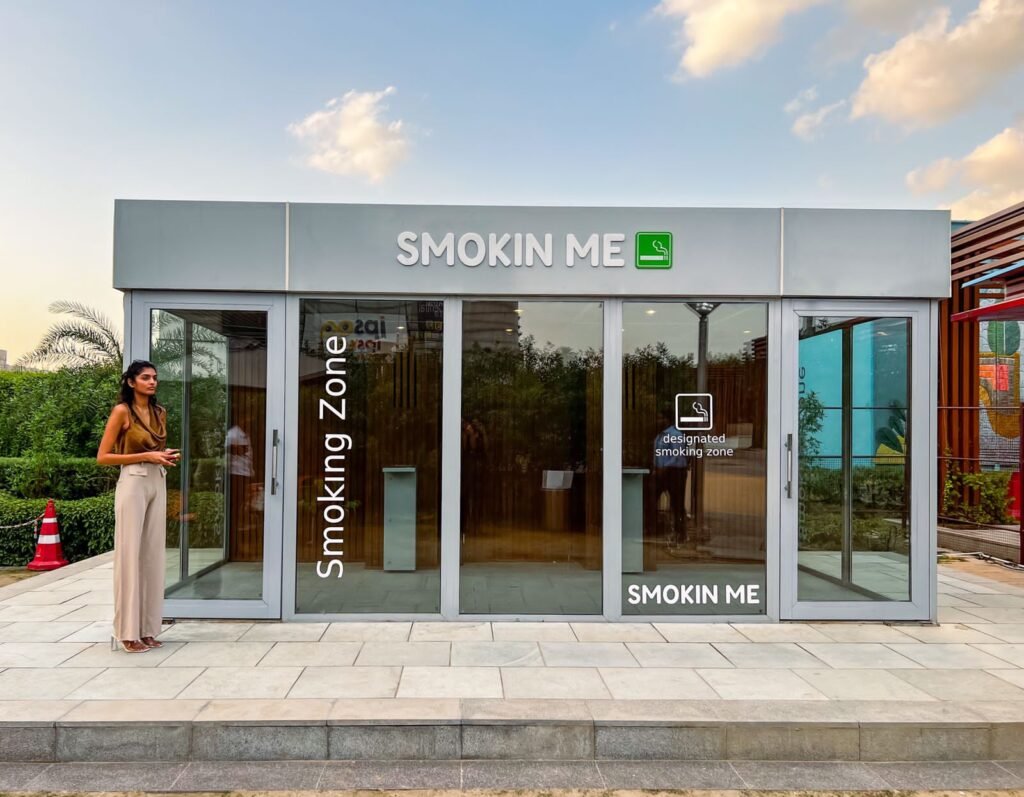
Smoking in public spaces has become an increasingly complex issue. With stricter laws banning smoking in restaurants, hotels, offices, airports and many other indoor public places, the question of where smokers can go without harming others is more pressing than ever. Smoke cabins — specially designed, ventilated indoor smoking spaces — offer a practical and humane way to address this challenge. Rather than simply displacing smokers to sidewalks, doorways or isolated areas, smoke cabins create a controlled environment that protects both smokers and non-smokers alike.
The core idea behind a smoke cabin is simple: provide a dedicated space where people can smoke without exposing others to secondhand smoke. Unlike makeshift smoking areas or poorly ventilated corners, modern smoke cabins use advanced filtration systems that capture airborne particles and odors before releasing cleaned air back into the surrounding room. High-efficiency filters, including HEPA and activated carbon stages, trap microscopic particles and neutralize odor, helping prevent harmful smoke from escaping the cabin. This means the air outside the smoke cabin remains cleaner and safer for everyone nearby.
A well-designed smoke cabin does more than filter air — it supports public health goals. Secondhand smoke isn’t just unpleasant; it’s a documented health risk that contributes to respiratory problems, heart disease and other long-term conditions. By containing smoke in a controlled space, smoke cabins help enforce indoor smoking bans while still providing smokers with a place to indulge without conflict. In workplaces and hospitality venues, this can lead to fewer people stepping outside into crowded walkways or doorways, where smoke can drift back in and create discomfort or health issues for non-smokers.
Many businesses and facilities struggle with the practicalities of compliance. Employees and customers who smoke may feel marginalized by harsh bans that offer no alternative, while non-smokers feel justified in demanding smoke-free environments. Smoke cabins bridge this gap, allowing both groups to coexist more peacefully. Employees take shorter, more predictable breaks, and customers enjoy establishments that respect their comfort and health. This can improve productivity, customer satisfaction and even the social atmosphere within a space.
Another often-overlooked advantage is safety. Purpose-built smoke cabins are engineered with materials that meet fire and safety standards, include proper ash collection systems, and are equipped with ventilation that prevents smoke from lingering. They can be placed inside large venues or near busy entrances in ways that keep traffic flowing while maintaining clean air.
Finally, smoke cabins have a broader societal benefit: they promote mindfulness around smoking in shared spaces. Instead of smokers feeling forced to light up wherever they can find an opening — often to the annoyance or discomfort of others — designated cabins signal respect for community health and shared environments. They acknowledge the reality that smoking remains a habit for many while actively minimizing its negative impact on bystanders.
In conclusion, indoor smoke cabins are not just another product; they are a thoughtful solution in a world where traditional smoking spaces are no longer feasible. By combining advanced air filtration, safety considerations and a respectful approach to both smokers and non-smokers, they offer a balanced way to address the very real problem of smoking in public spaces.