Call Us At +91 9811618476

Designated Smoking Zones
Designated Smoking Zones
Cigarette Vending Machines in India: Rules, Compliance & Where They're Used
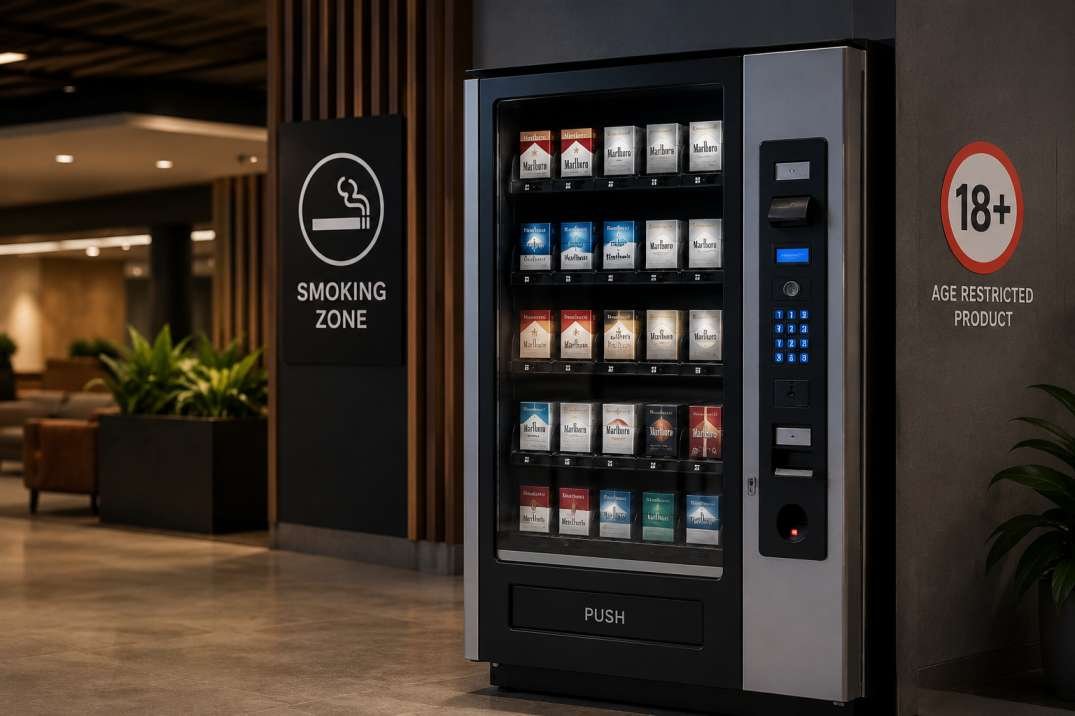
Cigarette vending machines occupy a genuinely sensitive regulatory space in India, sitting at the intersection of tobacco control law, retail regulation, and public health policy. Businesses considering a vending solution that includes cigarettes need to understand the applicable rules clearly before installation, not after. This guide takes a factual, compliance-first approach to cigarette vending machines in India — what the law actually requires, where these machines are typically used, and how to approach installation responsibly.
This is deliberately different in tone from most of our product content. Cigarette vending carries real regulatory weight, and we think the responsible approach is to be direct about the compliance complexity involved rather than presenting it as a simple convenience feature. A business that installs a cigarette vending solution without genuinely addressing the requirements below isn’t just risking a technical violation — it’s operating in a way that runs counter to the public health intent behind COTPA in the first place.
At SmokinMe, we provide vending solutions as part of a broader smoking zone offering, and we take the compliance dimension of cigarette vending seriously. This guide is intended to inform, not to encourage circumventing applicable regulations — if you’re considering a cigarette vending solution for your property, treat this as a starting point for a compliance conversation with your legal or regulatory advisor, not a substitute for one.
The Regulatory Framework Governing Cigarette Sales in India
Cigarette and tobacco product sales in India are governed primarily by the Cigarette and Other Tobacco Products Act (COTPA), 2003, which regulates advertising, packaging, sale to minors, and sale near educational institutions, among other provisions. Several specific requirements are directly relevant to any business considering a cigarette vending installation:
Prohibition of sale to minors. COTPA prohibits the sale of tobacco products to individuals under 18 years of age. This has direct implications for any automated vending format, since a vending machine needs a genuine mechanism for age verification to operate within this requirement — an unstaffed machine with no verification step creates real compliance exposure.
Restrictions on tobacco advertising and display. COTPA restricts tobacco product advertising, which affects how cigarette products can be displayed or promoted at a point of sale, including on or around a vending machine itself.
Prohibition near educational institutions. Tobacco product sale is prohibited within a specified distance of educational institutions, which is directly relevant to vending machine placement — a location that seems otherwise suitable may still fall within a restricted radius of a nearby school or educational facility.
State and local variations. Beyond the central COTPA framework, individual states and local authorities may apply additional restrictions or licensing requirements around tobacco retail, including vending. Requirements can vary meaningfully by location, and we recommend confirming current state and local requirements before finalising any installation.
Given this framework, the practical reality is that a fully automated, unstaffed cigarette vending machine faces genuine regulatory complexity in India specifically around age verification — a challenge that doesn’t apply in the same way to jurisdictions with less stringent tobacco control requirements.
This is worth stating plainly rather than glossing over: the age-verification requirement isn’t a minor technicality that a clever machine design can quietly work around. It reflects a genuine public health objective — preventing tobacco access to minors — and any vending solution that treats it as an afterthought is failing to meet the actual intent of the law, not just its technical letter.
Where Cigarette Vending Solutions Are Typically Used in India
Given the regulatory landscape, cigarette vending in India tends to appear in specific, controlled contexts rather than as an unrestricted public retail format:
Staffed or semi-staffed environments. Many properties address the age-verification requirement by pairing a vending solution with staff oversight — an attended kiosk or counter where a staff member can verify age before a transaction proceeds, rather than a fully unstaffed automated machine.
Access-controlled properties. Corporate campuses, hotels, and similar access-controlled environments, where the general public doesn’t have unrestricted access, present a different risk profile than a fully public retail location, though age-verification obligations still apply to any employee or guest attempting a purchase.
Within designated smoking zones. Positioning any cigarette vending solution within or immediately adjacent to a designated smoking zone — rather than a general public retail area — keeps the transaction contextually tied to an already-controlled, adult-oriented space.
Compliance-First Approach to Installing a Cigarette Vending Solution
If you’re considering a cigarette vending solution for your property, we recommend approaching it with the following priorities, in this order:
- Confirm current COTPA and state-level requirements with a qualified legal or compliance advisor. Regulations in this area carry genuine complexity and can change, so this isn’t a step to skip or assume based on general guidance alone.
- Address age verification directly, not as an afterthought. Whether through staffed oversight, access-controlled placement, or another verification mechanism, age verification needs to be a core part of the solution design, not a gap you hope doesn’t get tested.
- Confirm placement doesn’t fall within a restricted radius of educational institutions. This is a specific, checkable requirement that should be confirmed for any prospective location before installation.
- Review advertising and display restrictions to ensure any signage or product visibility associated with the vending solution complies with COTPA’s advertising provisions.
- Document your compliance approach. Maintaining a clear record of how your vending solution addresses each of these requirements provides a defensible position if compliance is ever questioned.
Cigarette Vending vs. General Vending Solutions
It’s worth distinguishing cigarette-specific vending from broader vending solutions, since the compliance considerations differ substantially. A vending machine or kiosk offering snacks, beverages, or general convenience items faces standard commercial retail regulations without the additional tobacco-specific requirements around age verification, advertising restrictions, and placement near educational institutions. If your property’s primary vending need is convenience access for smokers within a designated zone — water, snacks, lighters, and similar items — a non-tobacco vending solution avoids this additional regulatory complexity entirely while still serving smokers’ practical needs within the zone.
For properties that do want to offer cigarette access specifically, we generally recommend a staffed or semi-staffed approach given the age-verification requirement, rather than a fully automated machine with no oversight mechanism.
This trade-off is worth weighing honestly against your actual property needs. A staffed or semi-staffed cigarette vending point involves ongoing operational cost that a non-tobacco vending machine doesn’t require. For many properties, particularly those where cigarette access isn’t a core business need but rather a convenience for existing smoking-zone users, a simpler non-tobacco vending solution — paired with smokers bringing their own cigarettes into the zone — may be the more practical overall approach.
Coin-Operated and Automated Dispensing Formats
Some properties consider coin-operated or fully automated cigarette dispensing units specifically for their simplicity and lower staffing requirements. These formats face the same core compliance considerations outlined above — particularly around age verification — and the absence of staff oversight makes addressing this requirement through an alternative mechanism especially important. We cover this specific format, including where it’s used and how operators typically approach compliance, in more detail in our companion guide on coin-operated cigarette dispensers.
Our Approach to Vending at SmokinMe
We offer vending solutions as part of our broader smoking zone product line, and for cigarette-specific vending, we work with clients to understand their compliance obligations and recommend a solution format — staffed, semi-staffed, or access-controlled — that genuinely addresses age verification and placement requirements, rather than defaulting to a fully automated format without appropriate safeguards.
We’re not a substitute for legal or regulatory advice specific to your property and location, and we recommend pairing any cigarette vending installation with guidance from a qualified compliance advisor familiar with current COTPA requirements and any applicable state-level regulations.
Contact SmokinMe to discuss a vending solution for your property, including compliance-appropriate options for cigarette access within a designated smoking zone.
Frequently Asked Questions
What are the main legal requirements governing cigarette vending machines in India?
Cigarette vending in India operates under COTPA, 2003, which prohibits sale to minors, restricts tobacco advertising and display, and prohibits sale within a specified distance of educational institutions. Individual states may apply additional requirements. Given the age-verification challenge this creates for fully automated machines, we recommend confirming current requirements with a qualified legal advisor before installation.
Are cigarette vending machines legal in India?
Cigarette sale is legal in India subject to COTPA’s requirements, including age verification, advertising restrictions, and placement limitations near educational institutions. A fully automated, unstaffed vending machine faces genuine practical complexity in meeting the age-verification requirement specifically, which is why staffed or semi-staffed approaches are more commonly used for cigarette-specific vending.
How do cigarette vending machines verify the buyer’s age in India?
This is one of the central compliance challenges for automated cigarette vending in India, since COTPA prohibits sale to minors. Many properties address this through staffed or semi-staffed oversight — an attendant verifying age before a transaction — rather than relying on a fully automated machine with no verification mechanism.
Where can cigarette vending machines be legally placed in India?
Placement must avoid a specified restricted distance from educational institutions, per COTPA requirements. Beyond this, cigarette vending in India tends to appear in staffed or semi-staffed environments, access-controlled properties, or within designated smoking zones, rather than in unrestricted public retail locations, largely due to the age-verification requirement.
What’s the difference between cigarette vending machines and general vending solutions for smoking zones?
General vending solutions offering snacks, beverages, or convenience items face standard commercial retail regulations without the tobacco-specific requirements around age verification, advertising restrictions, and placement near educational institutions. Properties wanting to serve smokers’ practical needs without the additional compliance complexity of tobacco vending often choose a non-tobacco vending solution instead.
Are coin-operated cigarette dispensers legal and compliant in India?
Coin-operated cigarette dispensers face the same core COTPA compliance considerations as any cigarette vending format, particularly around age verification, given the absence of staff oversight in a typical coin-operated setup. We cover this specific format and how operators typically approach compliance in our companion guide on coin-operated cigarette dispensers.
What advertising restrictions apply to cigarette vending machines in India?
COTPA restricts tobacco product advertising, which extends to signage, branding, or product display associated with a vending machine or kiosk. Any cigarette vending installation should be reviewed against current advertising and display restrictions as part of the overall compliance approach.
Can businesses install cigarette vending machines within corporate offices or hotels in India?
Access-controlled properties like corporate offices and hotels present a different context than fully public retail locations, but age-verification obligations under COTPA still apply to any purchase attempt by an employee or guest. We recommend a staffed or semi-staffed approach even within access-controlled properties, given the ongoing verification requirement.
What should I do before installing a cigarette vending solution on my property?
Confirm current COTPA and state-level requirements with a qualified legal or compliance advisor, address age verification directly as a core design element, confirm your location isn’t within a restricted radius of an educational institution, review advertising and display compliance, and document your overall compliance approach.
Does SmokinMe provide cigarette vending machines, and how do you approach compliance?
We offer vending solutions as part of our broader smoking zone product line, and for cigarette-specific vending, we work with clients toward staffed, semi-staffed, or access-controlled formats that genuinely address age-verification requirements. We recommend pairing any installation with guidance from a qualified compliance advisor. Contact us to discuss your specific requirements.
Also Read:- Airport Smoking Lounges: Design Standards & What Passengers Expect