Call Us At +91 9811618476

Designated Smoking Zones
Designated Smoking Zones
Airport Smoking Lounges: Design Standards & What Passengers Expect
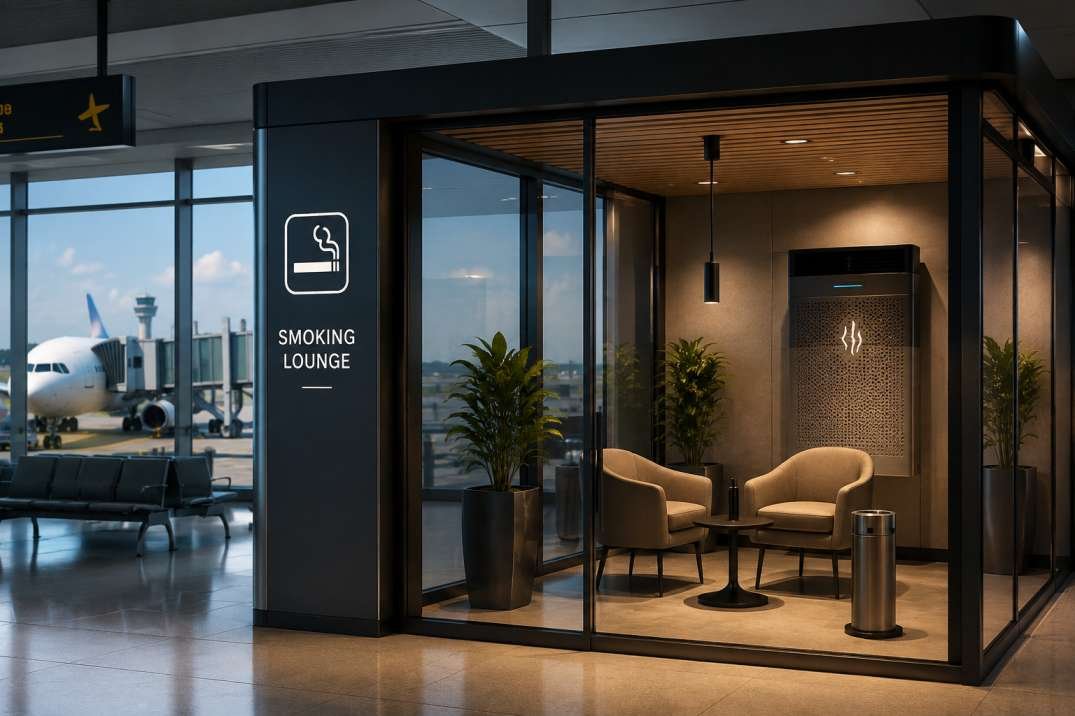
Airports operate under a unique set of demands that few other venues face: continuous, high-volume passenger traffic, strict regulatory oversight, and travellers who may be waiting for hours with genuinely limited alternatives if a smoking area isn’t available, comfortable, or easy to find. A poorly designed airport smoking lounge doesn’t just inconvenience a subset of travellers — it creates queuing problems, compliance risk, and a visible dent in passenger experience that reflects on the entire terminal.
At SmokinMe, we design smoking lounges specifically engineered for this kind of high-footfall, continuous-use environment. This guide covers what genuinely effective airport smoking lounge design looks like, what passengers actually expect, and specific considerations for UAE airport operators navigating that market’s particular regulatory landscape.
Why Airport Smoking Lounges Are a Different Category of Problem
A smoking cabin designed for a twenty-person office solves a fundamentally different problem than an airport smoking lounge. Airport lounges need to accommodate:
- Continuous, unpredictable footfall that doesn’t follow a typical office’s lunch-break or shift-change pattern — passengers arrive throughout all operating hours, often in bursts tied to flight schedules.
- International travellers unfamiliar with local terminal layout, who need the lounge to be genuinely easy to find via clear signage and intuitive wayfinding.
- Longer dwell times than a typical office smoking break, since travellers waiting for a delayed or connecting flight may use the space for extended periods.
- Strict airport authority compliance requirements, often more rigorous than standard commercial building codes given the scrutiny airports operate under.
- High-capacity, continuous-duty filtration, since the lounge may see near-constant use throughout the day without the natural downtime an office cabin experiences overnight or on weekends.
Treating an airport smoking lounge as simply “a bigger cabin” misses these distinctions. It requires purpose-built design from the ground up.
Core Design Standards for Airport Smoking Lounges
Capacity and Throughput
Airport smoking lounges need capacity planning based on realistic peak-hour passenger volume, not average daily use. A terminal handling several major flight departures within a short window can see a significant surge in lounge demand simultaneously — sizing for average use rather than peak use is one of the most common design mistakes we see.
Continuous-Duty Filtration
Unlike an office cabin that sees intermittent use throughout a working day, an airport lounge may operate under near-continuous load for extended hours. This means the filtration system needs a duty cycle genuinely rated for sustained, heavy use — not a system designed around occasional operation that happens to also work, less effectively, under continuous demand. We engineer our lounge filtration systems specifically around this higher-duty requirement, combining HEPA-14 and activated carbon filtration scaled for continuous operation.
Wayfinding and Signage
International travellers, often navigating an unfamiliar terminal under time pressure, need to locate the smoking lounge quickly and intuitively. This means clear signage visible from key terminal pathways, consistent iconography that doesn’t rely on language-specific text alone, and logical placement relative to gates, security checkpoints, and other passenger flow points.
Comfort for Extended Use
Given that travellers may spend meaningful time in an airport lounge — particularly during delays or long layovers — comfort matters more here than in a typical office cabin used for brief breaks. Adequate seating, sensible lighting, and a genuinely pleasant environment (not just a compliant one) all affect how well the space actually serves its purpose.
Regulatory Compliance Specific to Airports
Airport authorities frequently apply their own standards on top of general national tobacco control law, covering everything from exact placement relative to gates and security areas to specific ventilation and fire-safety requirements given the unique risk profile of an airport environment. We recommend confirming exact requirements with the relevant airport authority early in any lounge planning process, since these can be more detailed than standard commercial building requirements. Explore all products of SmokinMe.
What Passengers Actually Expect
Based on what we understand about traveller behaviour and feedback across the airports and travel-adjacent venues we’ve worked with, a few expectations come up consistently:
- Easy to find, without hunting through the terminal. A lounge tucked away with minimal signage effectively doesn’t exist for a traveller with a limited window before boarding.
- No visible smoke or lingering odour outside the lounge itself. Passengers expect the boundary to be genuinely contained — smoke or smell bleeding into the surrounding terminal undermines confidence in the space, and in the broader terminal experience.
- Enough capacity to avoid a queue. Waiting in line for a smoking lounge, particularly with a boarding time approaching, creates exactly the kind of stress air travel already generates plenty of.
- A space that doesn’t feel like an afterthought. A lounge that’s clearly been designed with genuine consideration — rather than a minimal, purely compliance-driven space — reflects better on the overall terminal experience.
Designing for UAE Airports Specifically
The UAE operates some of the busiest international air travel hubs in the world, and airport smoking lounges across Dubai, Abu Dhabi, and other Emirates hubs face particularly demanding requirements given the sheer volume of international traffic passing through.
A few UAE-specific considerations matter for airport smoking lounge design:
Extremely high passenger throughput. Major UAE airport hubs handle passenger volumes that significantly exceed most other airports globally, meaning lounge capacity planning needs to account for genuinely continuous, high-volume demand rather than the more moderate patterns seen at smaller regional airports.
International traveller diversity. With passengers arriving from across the globe, signage and wayfinding need to work across language barriers — icon-based, universally recognisable signage matters more here than in a domestically-focused terminal.
Climate considerations for any outdoor-adjacent lounge areas. If a UAE airport lounge design includes any outdoor or semi-outdoor elements, the same heat and humidity considerations that apply to any outdoor structure in the UAE apply here too — proper shade, heat-rated materials, and ventilation design that accounts for the climate.
Regulatory coordination across federal and emirate-level requirements. As with any UAE commercial installation, airport authorities may apply requirements on top of both federal tobacco control law and emirate-specific standards, making early regulatory engagement particularly important for a venue as heavily scrutinised as an airport.
We recommend engaging directly with the relevant UAE airport authority and, where appropriate, a licensed local consultant, to confirm exact current requirements for any UAE airport lounge project — regulatory specifics in this environment are best confirmed locally given how detailed and jurisdiction-specific airport authority requirements tend to be.
Maintenance Demands Unique to Airport Environments
Airport smoking lounges face harder operating conditions than most commercial smoking solutions, simply due to volume. Continuous, high-footfall use means filters reach end-of-life faster than in a moderate-use office setting, and ash disposal systems need more frequent servicing. We recommend airport operators build a more frequent maintenance schedule into their planning from the outset, rather than applying a standard commercial servicing interval to a venue with meaningfully higher usage volume.
Why SmokinMe for Airport Smoking Lounges
We design smoking lounges specifically engineered for high-footfall, continuous-use environments like airports — combining high-duty-cycle HEPA-14 and activated carbon filtration, fire-safe construction, and capacity planning based on realistic peak demand rather than averages. Every lounge project starts with a site assessment covering expected passenger volume, terminal layout, and regulatory requirements specific to your airport authority.
Contact SmokinMe today to discuss an airport smoking lounge designed for your terminal’s specific passenger volume and layout.
Also Read:- How to Choose a Smoking Cabin Manufacturer in India (2026 Buyer’s Guide)
Frequently Asked Questions
What makes airport smoking lounge design different from a standard office smoking cabin?
Airport lounges need to handle continuous, unpredictable footfall tied to flight schedules, serve international travellers unfamiliar with the terminal layout, accommodate longer dwell times during delays, meet stricter airport authority compliance requirements, and sustain high-capacity, continuous-duty filtration rather than the intermittent use pattern typical of an office cabin.
How should airport authorities size a smoking lounge for passenger capacity?
Size lounges based on realistic peak-hour passenger volume — accounting for surges tied to major flight departure windows — rather than average daily use. Sizing for average use is one of the most common mistakes in airport lounge planning, since it consistently underestimates demand during genuine peak periods.
What filtration standard should an airport smoking lounge use given continuous operation?
Airport lounges need filtration systems with a duty cycle genuinely rated for sustained, heavy use, not a system designed primarily for occasional operation. We engineer our lounge filtration around combined HEPA-14 and activated carbon filtration scaled specifically for continuous, high-volume demand.
What do passengers expect from an airport smoking lounge?
Passengers expect the lounge to be easy to find through clear signage, genuinely free of smoke or odour outside its boundary, sized with enough capacity to avoid queues, and designed with real consideration rather than feeling like a minimal, purely compliance-driven afterthought.
What are the key considerations for designing an airport smoking lounge in the UAE, specifically for Dubai or Abu Dhabi airports?
UAE airport hubs handle exceptionally high international passenger throughput, requiring capacity planning for continuous, high-volume demand. Signage needs to work across language barriers given international traveller diversity, and any outdoor-adjacent lounge elements need UAE climate-appropriate materials and shade. We recommend engaging directly with the relevant airport authority and a licensed local consultant to confirm exact current requirements.
What wayfinding and signage standards work best for airport smoking lounges?
Use clear signage visible from key terminal pathways, consistent icon-based imagery that doesn’t rely solely on text given international passenger diversity, and logical placement relative to gates, security checkpoints, and other major passenger flow points. A lounge that’s difficult to locate quickly is effectively unavailable to time-pressed travellers.
How does regulatory compliance for airport smoking lounges differ from standard commercial buildings?
Airport authorities frequently apply their own detailed standards on top of general national tobacco control law, covering exact placement relative to gates and security areas, along with specific ventilation and fire-safety requirements reflecting the airport’s unique risk profile. We recommend confirming exact requirements with the relevant airport authority early in any lounge planning process.
How do smoking room requirements differ at UAE airports specifically?
UAE airports combine federal tobacco control requirements with emirate-specific standards and airport-authority-level requirements, creating a genuinely layered regulatory environment. Given the scrutiny major UAE hubs operate under, we recommend confirming current requirements directly with the specific airport authority and a licensed local consultant rather than relying on general guidance.
What maintenance schedule do airport smoking lounges need compared to office cabins?
Airport lounges typically need more frequent filter replacement and ash disposal servicing than office cabins, given their continuous, high-volume usage pattern. We recommend building a more frequent maintenance schedule into airport lounge planning from the outset, rather than applying standard commercial servicing intervals designed for lower-footfall venues.
How can SmokinMe help design an airport smoking lounge for my terminal?
Contact SmokinMe with details about your terminal’s expected passenger volume, layout, and any airport-authority-specific requirements. We assess each project individually and design lounges around realistic peak demand and continuous-duty filtration needs, rather than adapting a standard commercial product for an airport environment.