Call Us At +91 9811618476

Designated Smoking Zones
Designated Smoking Zones
What Are Designated Smoking Zones? A Complete Guide for Indian Businesses
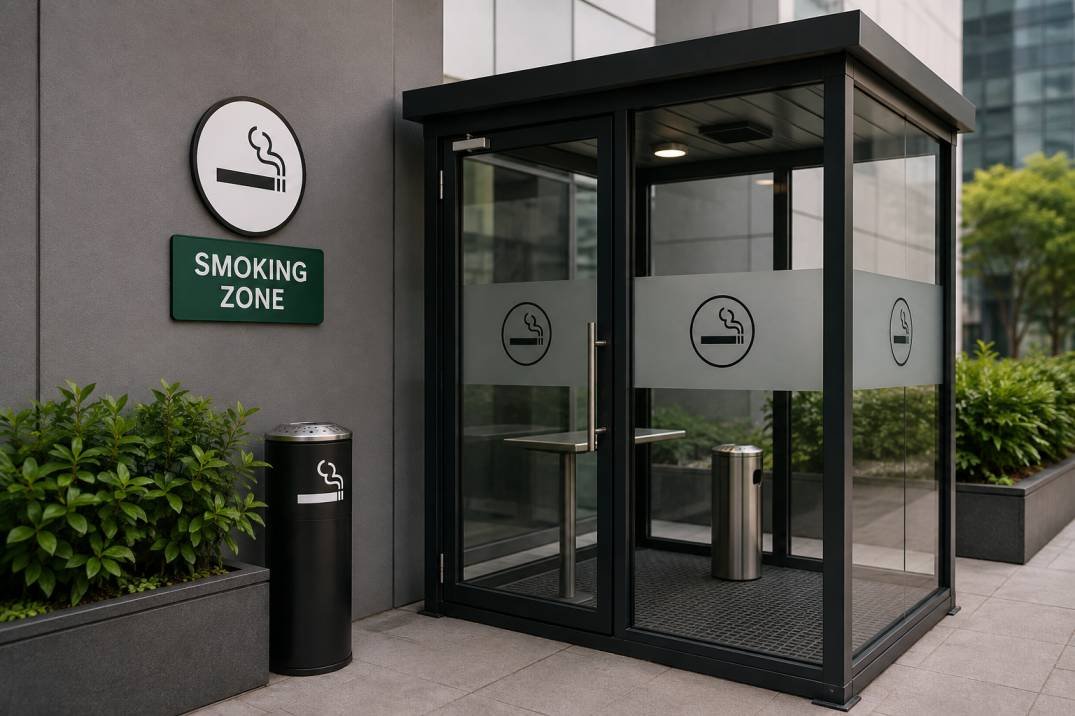
If you run a business in India, you already know that smoking is banned in every enclosed public place under the Cigarette and Other Tobacco Products Act (COTPA), 2003. But you can still legally provide a smoking area for employees, guests, or visitors — as long as it’s a properly designated smoking zone that keeps smoke contained and away from non-smokers.
At SmokinMe, we design and manufacture designated smoking zones for offices, hotels, malls, airports, and industrial facilities across India. In this guide, we break down exactly what a designated smoking zone is, the different types you can choose from, who actually needs one, and how to set one up the right way.
What Is a Designated Smoking Zone?
A designated smoking zone is a specific, clearly marked area where smoking is permitted, separate from the rest of a building or property. Under Indian law, any enclosed public place — offices, restaurants, malls, airports, hotels — must remain 100% smoke-free except within a designated smoking area that meets specific ventilation and signage requirements.
The goal is simple: give smokers a legal, comfortable place to smoke while protecting everyone else from secondhand smoke, odour, and the health risks that come with passive exposure. A well-designed smoking zone also protects your business — it keeps cigarette litter away from entrances, reduces smoke-related complaints from staff and visitors, and helps you avoid the fines and reputational damage that come with non-compliance.
We build smoking solutions that go beyond the bare legal minimum. Our designated smoking zones use multi-stage filtration, HEPA-14 filters, and activated carbon to capture smoke and odour at the source — not just move it from one room to another. That distinction matters more than most businesses realise. A poorly ventilated smoking area doesn’t just fail compliance checks; it lets smoke and odour drift back into shared spaces, defeating the entire purpose of having a designated zone in the first place.
If you’re evaluating options for your property, it helps to understand exactly what’s available before you commit to a design or a budget. Below, we walk through each type of smoking zone we build, who typically needs one, and what to think through before installation.
Types of Designated Smoking Zones
Not every business needs the same kind of smoking zone. The right choice depends on your available space, budget, footfall, and whether you’re working indoors or outdoors. Here are the four main types we build.
1. Indoor Smoking Cabins
An indoor smoking cabin is a self-contained, enclosed unit that captures smoke immediately at the source using built-in filtration. Unlike a traditional smoking room, it doesn’t need ducting, civil construction, or HVAC modifications — you place it, plug it in, and it’s ready to use.
We design our indoor smoking cabins specifically for corporate offices, IT parks, and commercial buildings where floor space is limited and construction isn’t an option. Multi-stage filtration removes visible smoke and lingering odour, so the surrounding office air stays clean.
2. Outdoor Smoking Cabins and Zones
For businesses with outdoor space — courtyards, parking areas, terraces — an outdoor smoking cabin offers weather-protected, contained smoking without the cost of indoor construction. We build outdoor units with weather-resistant materials that handle rain, heat, and dust while still filtering smoke and odour effectively.
Outdoor zones work particularly well for factories, industrial facilities, and campuses where you want to keep smoking activity fully separated from building entrances and walkways.
3. Smoking Rooms (Traditional, Built-In)
A smoking room is a permanently constructed enclosed space integrated with a building’s ventilation system. It requires civil work, ducting, and ongoing HVAC servicing. Smoking rooms can still make sense for high-capacity venues with existing infrastructure, but they come with higher installation costs, longer setup times, and more maintenance than a modern smoking cabin.
We generally recommend smoking cabins over traditional smoking rooms for most Indian businesses — faster to install, easier to relocate, and lower to maintain over time. If you want the full comparison, read our detailed breakdown in Smoking Cabin vs Smoking Room.
4. Smoking Lounges
A smoking lounge is a larger-capacity version of a smoking cabin, designed for high-footfall locations like airports, malls, and railway stations where many people need to use the space throughout the day. We build our smoking lounges with the same multi-stage filtration as our cabins, scaled up for continuous, heavy use.
Choosing between these four options usually comes down to three factors: how much space you have, how many people will use the zone at once, and whether you’re working with an existing building or planning a new one. We help every client work through this decision as part of our site assessment, rather than pushing a single product regardless of fit.
Who Actually Needs a Designated Smoking Zone?
Almost any commercial or public-facing property benefits from a properly designed smoking zone. Here’s where we see the most demand:
- Corporate offices and IT parks — employees need a legal place to smoke without leaving the building or standing outside the main entrance.
- Hotels and hospitality properties — guests expect a designated smoking area, and its placement directly affects guest experience. We cover this in detail in How to Choose the Smoking Area for Your Hotel.
- Shopping malls — high footfall means you need a solution that handles continuous use without smoke drifting into retail areas.
- Airports and railway stations — travellers need a compliant, comfortable smoking lounge, often within a tightly regulated terminal environment.
- Hospitals and healthcare facilities — even though smoking indoors is discouraged, outdoor cabins near hospital grounds give staff, visitors, and patients a controlled option away from clinical areas.
- Factories and industrial facilities — shift workers need accessible smoking breaks that don’t disrupt operations or safety zones.
- Educational campuses — outdoor smoking cabins keep smoking areas separate from student-heavy zones while remaining accessible to staff and visitors.
If your business falls into any of these categories, a designated smoking zone isn’t just a compliance box to tick — it’s part of how you manage your property, protect non-smokers, and keep your workplace or venue clean. It also sends a clear signal to employees, guests, and visitors that you’ve thought through their comfort and safety, rather than leaving smoking to happen wherever it’s least inconvenient to notice.
We’ve seen this play out consistently across the properties we work with. Offices that install a proper smoking cabin see fewer complaints about smoke drifting into open-plan work areas near entrances. Hotels that place a well-designed smoking lounge away from guest rooms and dining areas report better guest satisfaction scores. And malls that install multiple smaller smoking zones instead of one large one tend to spread footfall more evenly, reducing wait times and overcrowding at any single location.
How We Approach Smoking Solutions at SmokinMe
Every property is different, so we don’t sell a single one-size-fits-all product. Instead, we assess your available space, expected daily footfall, and whether you need an indoor or outdoor solution, then recommend the right smoking zone — cabin, lounge, or full smoking room — for your specific site.
Our smoking solutions share a few things in common across every product line:
- Multi-stage filtration, including HEPA-14 filters and activated carbon, to capture smoke particles and neutralise odour.
- Plug-and-play installation for most cabin models — no ducting, no major civil work, minimal downtime.
- Portability, so if your office relocates or your layout changes, your smoking cabin can move with you.
- Flexible ownership models — you can purchase, lease, or franchise a SmokinMe solution depending on your business needs.
We also build vending solutions to complement our smoking zones — smart digital vending machines and staffed convenience kiosks that give smokers easy access to cigarettes and essentials without leaving the designated area. This matters more than it might seem: keeping smokers within the designated zone for the full duration of their break, rather than stepping out to a shop and back, reduces foot traffic through non-smoking areas and keeps your compliance boundary clean and consistent. You can explore all our product lines on our Products page.
Every smoking zone we deliver also comes with a Lifetime Performance Guarantee on eligible components, so you’re not left managing unexpected repair costs a year or two after installation. We see this as part of building a genuine long-term smoking solution, not just selling a one-time product.
Setting Up a Designated Smoking Zone: What to Consider
Before you install anything, work through these questions:
- How many people will use the zone at peak times? Lunch breaks and shift changes create much higher demand than average daily use.
- Indoor or outdoor? This determines whether you need a weather-resistant outdoor cabin or an indoor unit designed for office interiors.
- What does local compliance require? Ventilation, signage, and space requirements vary by property type and location — always confirm with your local authority or facilities team before installation.
- Do you need ducting, or can you go plug-and-play? A modern smoking cabin skips the construction altogether; a traditional smoking room does not.
- Who’s responsible for maintenance? Filter replacement, cleaning, and ash disposal all need a clear owner once the zone is operational.
We walk every client through this assessment before recommending a solution — because the right smoking zone should solve a genuine operational need, not just look good in a floor plan.
It’s also worth thinking beyond your current needs. If your headcount is likely to grow, or your property expects seasonal spikes in footfall, a slightly larger cabin or an additional smoking lounge can save you from replacing or expanding the setup within a year or two. We factor this into every recommendation, since a smoking zone is meant to be a long-term fixture of your property, not a temporary fix.
Finally, don’t underestimate signage and visibility. A smoking zone that’s hard to find or poorly marked often gets ignored in favour of informal, non-compliant spots — undermining the entire point of installing one. Clear signage, good lighting, and an accessible location all contribute directly to how consistently people actually use the space you’ve built for them.
Ready to Build a Compliant Smoking Zone?
Whether you’re managing a corporate office, a hotel, a mall, or an industrial facility, SmokinMe designs and installs smoking solutions built for Indian businesses — compliant, low-maintenance, and genuinely effective at controlling smoke and odour.
Contact SmokinMe today to discuss your space and find the right designated smoking zone for your property.
Frequently Asked Questions
What are designated smoking zones, and what are the legal requirements for Indian businesses?
A designated smoking zone is a clearly marked, separate area where smoking is permitted inside an otherwise smoke-free property, as required under India’s Cigarette and Other Tobacco Products Act (COTPA), 2003. Every enclosed public place — offices, hotels, malls, restaurants, airports — must remain smoke-free outside of these designated areas. Requirements typically include proper ventilation, clear signage, and physical separation from non-smoking areas. Local authorities may add additional conditions depending on your property type, so we always recommend confirming exact requirements with your facilities or compliance team before installation.
How do I set up a designated smoking zone in an Indian office?
Start by assessing your available space, expected daily footfall, and whether an indoor or outdoor solution fits your layout. From there, choose between a plug-and-play smoking cabin (fastest to install, no ducting required) or a traditional built-in smoking room (more construction, higher cost). We walk you through this assessment and handle installation end-to-end — read our step-by-step breakdown in How to Set Up a Designated Smoking Zone in Your Office.
What are the guidelines for setting up a smoking area in a restaurant in India?
Restaurants need a clearly separated smoking area with proper ventilation, so smoke doesn’t drift into dining or kitchen areas. The space must be signed appropriately and physically enclosed or separated to prevent secondhand smoke exposure for non-smoking guests and staff. We design restaurant-specific smoking solutions that balance guest comfort with compliance — get in touch to discuss your layout.
Which companies provide signage, equipment, and installation services for designated smoking areas in India?
SmokinMe provides complete, end-to-end smoking zone solutions — including cabin and lounge manufacturing, signage, and professional installation — for corporate offices, hotels, malls, airports, and industrial facilities across India. Rather than sourcing signage, filtration equipment, and installation separately from different vendors, you can work with one team that handles design, manufacturing, and setup together. Contact us to discuss your project, whether it’s a single office cabin or a multi-site corporate campus installation.
Where can I find air purification systems and filtration equipment for indoor smoking areas?
Every SmokinMe indoor smoking cabin comes with built-in multi-stage filtration, including HEPA-14 filters and activated carbon, so you don’t need to source air purification equipment separately. This filtration captures smoke particles and neutralises odour directly at the source, keeping the surrounding air clean without a separate ducting or HVAC system. Learn more about how this works in How HEPA-14 Removes 99.95% of Smoke Particles.
What are the penalties for non-compliance with smoking zone rules in India?
Under COTPA, 2003, smoking in a non-designated public area can result in fines for individuals, and property owners or managers can also face penalties for failing to provide compliant smoking arrangements or for allowing smoking in prohibited areas. Exact fine amounts and enforcement vary by state and local authority. The safest approach is to install a properly designed, compliant smoking zone rather than risk penalties for non-compliance — we help you get this right from the start.
How do Indian malls and airports manage smoking zones for high footfall?
Malls and airports typically use dedicated smoking lounges rather than smaller cabins, since they need to accommodate many people throughout the day without long waits or overcrowding. These lounges use the same multi-stage filtration as smaller cabins, scaled up for continuous, heavy use, and are usually placed away from main walkways, food courts, and departure gates to keep smoke fully contained. We design smoking lounges specifically for these high-traffic environments — explore our Smoking Lounges product line for more detail.
What are the ventilation requirements for enclosed smoking spaces in Indian offices?
Enclosed smoking spaces need ventilation that prevents smoke and odour from escaping into surrounding non-smoking areas — either through a dedicated exhaust and ducting system, or through built-in filtration that captures and cleans the air on-site. Our smoking cabins use the second approach: multi-stage filtration handles smoke capture without needing a separate ducting system, which simplifies compliance considerably compared to a traditional built-in smoking room.
What products work best for creating a comfortable designated smoking zone in a hotel?
For hotels, we generally recommend a smoking cabin or lounge with air-conditioned interiors, comfortable seating, and strong odour control — guest comfort matters just as much as compliance in a hospitality setting. Placement is equally important: keep the zone away from main entrances, guest room windows, and HVAC intakes. We cover the full decision-making process in How to Choose the Smoking Area for Your Hotel.
How much does it cost to build a compliant designated smoking area in a hotel?
Cost depends on the type of solution you choose, the size of the space, and whether you go with a plug-and-play cabin or a traditional built-in smoking room. A plug-and-play smoking cabin is generally the more cost-effective option since it avoids the civil construction, ducting, and HVAC modification that a traditional smoking room requires. We assess your property and provide a tailored quote based on your specific footfall and space — contact us for an estimate.
Can I get professional design and installation services for a smoking zone at a corporate campus?
Yes — we work with corporate campuses of all sizes, from a single-building office to multi-site campuses that need several smoking zones installed consistently across locations. Our team assesses each site’s space and footfall individually and recommends the right mix of cabins or lounges for your campus, then manages installation end-to-end.
What are the best practices for maintaining and keeping designated smoking zones clean and hygienic?
Routine maintenance mainly involves replacing filters on schedule, emptying ash disposal systems regularly, and keeping the interior surfaces clean to prevent odour buildup. High-traffic zones need more frequent servicing than occasional-use areas. Choosing ashtrays and waste bins designed specifically for smoking zones — with proper fire-safe ash containment — also makes daily cleaning significantly easier for facilities staff.
What are the legal dimensions and specifications for outdoor smoking shelters in India?
Outdoor smoking shelter specifications vary by state and local authority, but generally require adequate separation from building entrances, windows, and HVAC intakes, along with clear signage and, in many cases, weather protection for year-round use. We recommend confirming exact space and distance requirements with your local municipal authority before finalising a design, and we build our outdoor cabins to accommodate these requirements while remaining weather-resistant.
Which fire-resistant materials are recommended for smoking zone construction?
Smoking zones should be built using fire-safe materials that can withstand cigarette embers and heat without posing a fire risk — this includes fire-resistant panelling, safety glass, and properly rated electrical components throughout the unit. All SmokinMe cabins are manufactured using fire-safe materials as standard, with integrated ash disposal systems designed specifically to reduce fire risk.
What types of ashtrays and waste bins are suitable for designated smoking zones?
The right ashtrays and waste bins for a smoking zone should have fire-safe ash containment, be easy to empty and clean, and be positioned to prevent cigarette litter from spreading beyond the designated area. Every SmokinMe cabin includes an integrated, fire-safe ash disposal system as part of the unit itself, so you don’t need to source and manage separate ashtray equipment.
Are consultants available who specialise in smoking zone compliance for Indian businesses?
Yes — at SmokinMe, our team doesn’t just manufacture smoking cabins and lounges; we also guide clients through the compliance and site-assessment process before recommending a solution. This includes reviewing your space, expected footfall, and applicable local requirements so the final installation meets both your operational needs and regulatory obligations. Reach out to our team for a consultation on your specific property.