Call Us At +91 9811618476

Designated Smoking Zones
Designated Smoking Zones
How To Choose The Smoking Area For Hotel
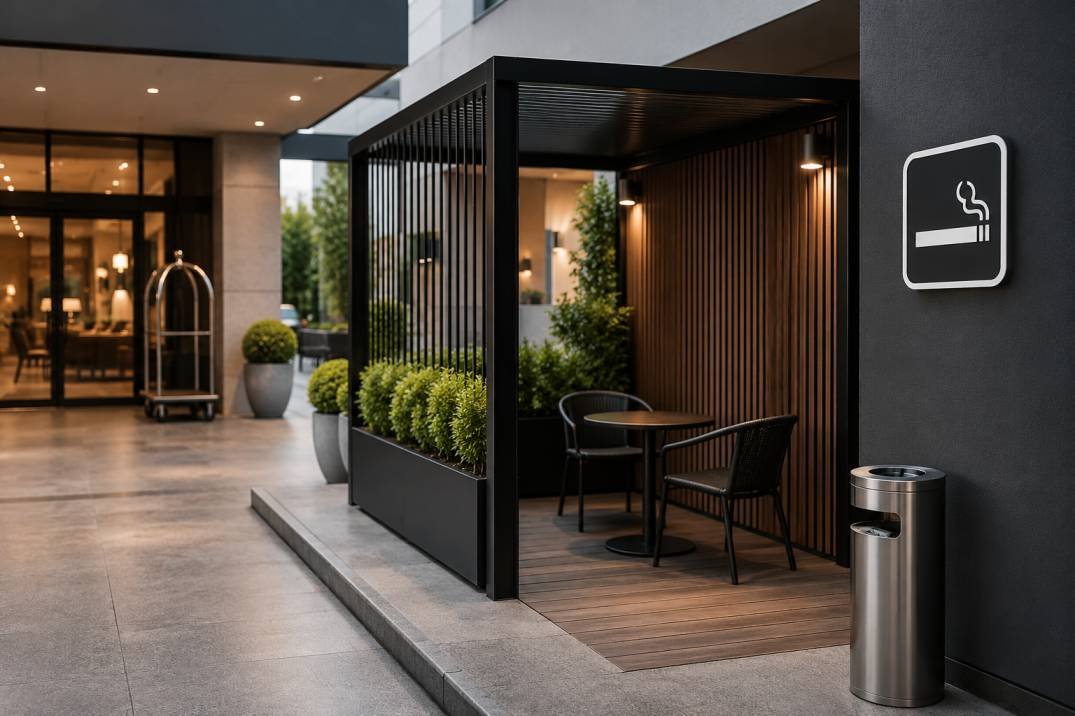
A hotel smoking area should be convenient for smokers without exposing other guests to unwanted smoke. That means you can’t simply choose the nearest empty corner.
Before deciding on a location, consider guest traffic, airflow, entrances, HVAC intakes, safety, accessibility, cleanliness and local smoking regulations. The right location, combined with a well-designed smoking zone or cabin, can keep the experience comfortable for guests and easier for your staff to manage.
At Smokin Me, we recommend planning the smoking area as part of the property’s overall layout—not as an afterthought.
Why Smoking Area Location Matters for Hotels
Hotels serve different types of guests at the same time. A smoker may want a convenient place to smoke, while another guest may be particularly sensitive to cigarette smoke. Your smoking area needs to accommodate the first without unnecessarily exposing the second.
Poor placement can create several operational problems:
- Smoke can drift toward entrances, windows and outdoor seating.
- Cigarette butts can collect around landscaping and walkways.
- Guests may have to pass through the smoking area to reach another facility.
- Outdoor furniture can absorb smoke and odours.
- Staff may spend additional time cleaning the surrounding area.
- A poorly designed smoking spot can look out of place on an otherwise premium property.
The objective is simple: make the smoking area convenient for smokers while keeping it separate from the main guest journey.
5 Key Rules for Choosing the Right Spot
1. Keep It Away From Main Entrances and Guest Doors
Avoid placing the smoking area beside the lobby, guest entrances or busy pedestrian routes. Doors can carry smoke into the building, affecting guests before they even reach reception.
As a practical benchmark, some properties may aim for 25–30 feet of separation from major doors and sensitive areas where space allows. This is not a universal legal requirement, so always check the rules that apply to your property.
Also consider side entrances, emergency exits, guest-room entrances and valet areas. The more you separate smoking activity from guest traffic, the easier it is to protect the guest experience.
2. Check Windows, HVAC Intakes and Ventilation Equipment
A smoking area can be outdoors and still create an indoor air problem if it is too close to a fresh-air intake or openable window.
Before choosing the spot, check:
- Fresh-air and HVAC intake vents
- Openable guest-room windows
- Kitchen ventilation points
- Outdoor HVAC equipment
- Service-area ventilation
Don’t assess the location only from a floor plan. Walk the property and observe how air moves around courtyards, building corners and enclosed areas at different times of day.
3. Follow Wind Direction, Not Just the Property Map
An empty corner isn’t automatically a good smoking area. Surrounding walls, landscaping and structures can trap or redirect smoke toward occupied spaces.
Where possible, observe the property’s prevailing wind direction and how air moves around:
- Building corners
- Courtyards
- Covered walkways
- Rooftops
- Parking structures
- Large landscaping features
A simple on-site observation can reveal issues that aren’t obvious on an architectural plan.
4. Separate Smokers From Family, Dining and Recreation Areas
Don’t place the smoking area beside another guest amenity simply because there is spare space.
Keep it away from:
- Swimming pools
- Children’s play areas and kids’ clubs
- Outdoor restaurants and breakfast terraces
- Event lawns
- Outdoor lounges
- Busy garden paths
This is especially important for resorts and family-oriented hotels. At the same time, avoid hiding the area in a poorly lit service alley.
The goal is separation without unnecessary isolation.
5. Make the Smoking Area Easy to Reach
A smoking area that is difficult to find or access may encourage guests to smoke elsewhere.
Plan for:
- Clear signage and walking routes
- Adequate lighting
- Safe, non-slip access
- Weather conditions
- Appropriate seating
- Visibility for hotel staff
The area should feel like a deliberate part of the property, not an afterthought. For hotels with limited or awkward outdoor space, a purpose-built smoking cabin or zone can help create that separation without sacrificing accessibility.
Check Local Smoking, Fire and Property Regulations
Before you install anything, check the rules that apply to your property.
Depending on your location and property type, you may need to consider smoking restrictions, building requirements, fire-safety provisions, municipal rules and requirements affecting enclosed or designated smoking spaces.
We recommend involving the appropriate property, facilities or compliance team before installation. Where local requirements are unclear, obtain advice from the relevant authority or qualified professional.
Do not assume that a location is acceptable simply because it is outdoors. Explore Outdoor Smoking Cabins
Plan for Cigarette Waste and Daily Maintenance
A smoking area generates waste. Your design should account for it from day one.
A proper setup should provide an appropriate method for collecting cigarette butts and ash, while making routine cleaning straightforward for housekeeping or facility staff.
Think beyond the ashtray itself. Look at the surrounding floor, walls, landscaping and furniture.
A well-planned smoking zone should help you prevent:
- Cigarette litter on walkways
- Burn marks on surfaces
- Overflowing receptacles
- Unpleasant odours
- Dirty-looking landscaping
- Extra cleaning around the smoking area
The cleaner the area remains, the less likely it is to become an eyesore on your property.
Open Smoking Area vs. Dedicated Smoking Cabin
Not every hotel needs the same setup. An open-air smoking zone can work when the property has sufficient outdoor space and favourable conditions. A dedicated cabin becomes more attractive when you need stronger separation, weather protection, controlled use of space or a more finished appearance.
| Consideration | Basic Open-Air Area | Dedicated Smoking Cabin |
| Space planning | Requires suitable outdoor space | Can provide a defined footprint |
| Weather | More exposed to rain, heat and wind | Can offer greater weather protection |
| Smoke movement | More dependent on natural airflow | Can be designed around a dedicated smoking environment |
| Appearance | Depends heavily on landscaping and maintenance | Can provide a more intentional, organised look |
| Guest separation | Requires careful site selection | Creates a clearly defined smoking destination |
| Maintenance | Waste can spread beyond the immediate area | Waste and smoking activity can be concentrated in one location |
The right choice depends on your property. A cabin should not be selected simply because it looks more sophisticated; it should solve a genuine operational or space-planning need.
Why Improvised Smoking Areas Often Fail
A bench, ashtray and sign may appear to solve the problem quickly. In a busy hotel, however, that setup can become difficult to manage.
Rain can make the area uncomfortable. Wind can carry smoke across guest routes. Cigarette waste can spread into nearby landscaping. And if the location was chosen without checking HVAC intakes or guest circulation, you may still receive complaints.
This is where a purpose-built smoking zone can make more sense.
Instead of adapting whatever space happens to be available, you can create a clearly defined facility around the property’s actual requirements.
Why We Recommend Smokin Me for Hotel Smoking Zones
At Smokin Me, we understand that a hotel smoking area is not simply a place to put an ashtray. It is part of your property’s layout, guest experience and day-to-day facility management.
We provide smoking cabins and smoking-zone solutions for businesses that want a more organised alternative to makeshift smoking areas. Our approach is to look at the available space, the property’s needs and the way guests use the site before recommending a suitable solution.
That matters because a boutique hotel, business hotel and resort rarely have the same requirements.
For example, your property may need a smoking solution for:
- A compact outdoor area
- A hotel terrace or rooftop
- A resort property with large outdoor grounds
- A designated area near parking
- A commercial hospitality complex
- A location where guest and smoking traffic need clear separation
Rather than forcing every hotel into the same format, we can help you identify the smoking cabin or smoking-zone approach that makes sense for your property.
What to Check Before You Finalise the Location
Use this quick site-planning checklist with your facilities team:
- Is the area away from major entrances and guest doors?
- Are fresh-air HVAC intakes and openable windows sufficiently separated?
- Have prevailing wind conditions been considered?
- Is it away from pools, children’s areas and outdoor dining?
- Can guests reach it safely at night?
- Is the route clearly identifiable?
- Is there adequate provision for cigarette waste?
- Can housekeeping or facilities staff clean it efficiently?
- Does the location work in different weather conditions?
- Does the design fit the hotel’s overall appearance?
- Have applicable smoking, building and fire-safety requirements been checked?
- Would a dedicated smoking cabin provide better control than an open-air corner?
If several answers are “no”, your current location probably needs another look.
Common Mistakes Hotel Managers Should Avoid
Choosing the nearest empty corner: A space is not necessarily a suitable smoking space. Check airflow, guest circulation and building services first.
Putting it beside the lobby: This creates unnecessary exposure for arriving and departing guests.
Ignoring HVAC equipment: A smoking area near a fresh-air intake can undermine the separation you were trying to create.
Forgetting the evening experience: A smoking area that feels safe during the day may become inconvenient or poorly lit after dark.
Treating appearance as secondary: Guests notice neglected outdoor areas. Your smoking zone should look like part of the property rather than an improvised addition.
Planning the ash disposal later: Waste management should be included in the original design, not added after cigarette litter becomes a problem.
Plan Your Hotel Smoking Zone With Smokin Me
The right location is important, but a successful hotel smoking area also needs to work for guests, staff, weather and your property’s overall appearance.
At Smokin Me, we provide professional smoking cabins and smoking-zone solutions designed around your available space and operational needs—so you don’t have to rely on makeshift smoking corners.
Planning a smoking area for your hotel? Contact Smokin Me today to discuss your space and find the right smoking cabin or smoking-zone solution. Contact Us!
Frequently Asked Questions
Can a hotel convert an existing outdoor space into a smoking area?
Yes, but the space should first be assessed for airflow, access, safety, surrounding activities and local requirements. A suitable smoking cabin can also make an existing small area more practical.
Does a smoking cabin need a separate ventilation system?
That depends on the cabin’s design and how it is intended to manage smoke. Before installation, confirm the ventilation and filtration specifications against your property’s requirements.
How much space does a hotel need for a smoking cabin?
There is no single size that works for every hotel. The required footprint depends on expected users, available space, seating and the type of smoking solution you choose.
Should hotels provide seating inside the smoking area?
Seating can improve usability, particularly where guests may spend several minutes in the area. However, it should be planned around the available space and expected usage rather than added at the expense of safe movement.
Can a smoking area be installed on a hotel rooftop?
Potentially, yes, but rooftop installations require additional consideration for wind exposure, structural suitability, access, weather protection and building or fire-safety requirements. A site assessment should come first.
Also Read:- Requirements for Installing a Smoking Cabin in an Office